Augmented Reality Web Components Transforming Product Visualization Techniques in Online Retail Environments
Rafael Brooks · Jul 23, 2026
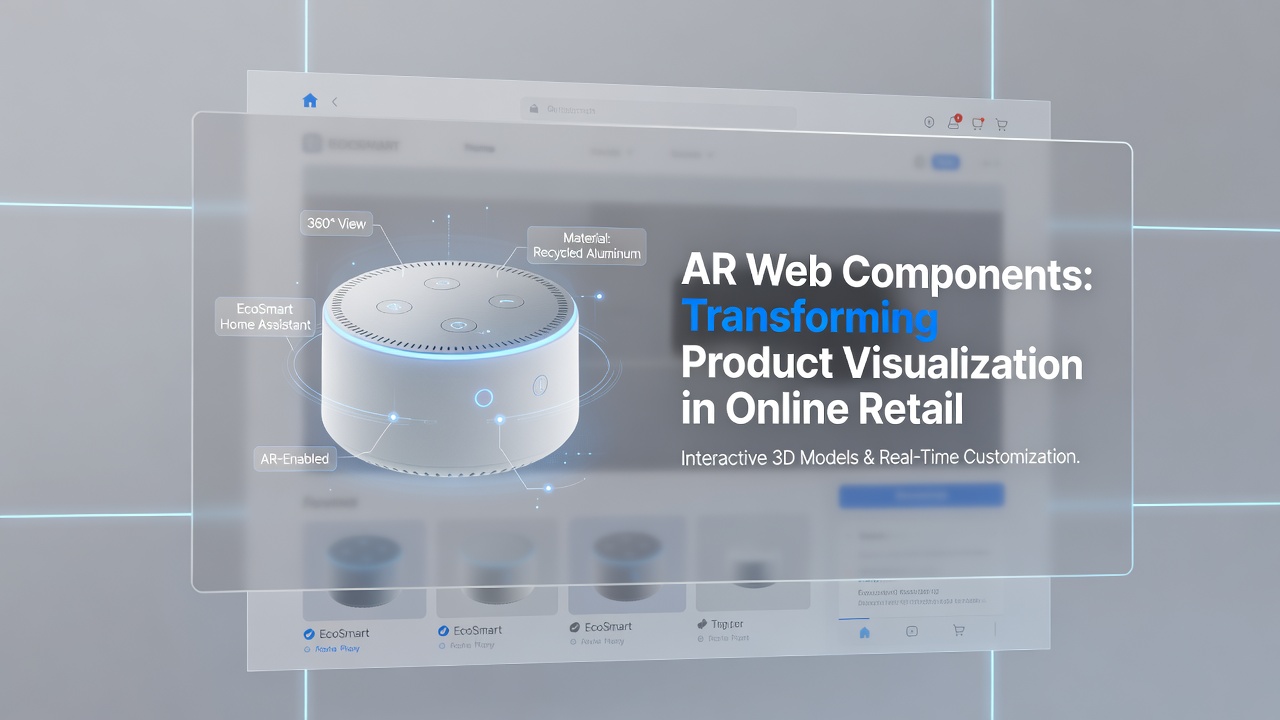
Augmented Reality Web Components Transforming Product Visualization Techniques in Online Retail Environments
Augmented reality web components have shifted how online retailers present products by embedding interactive 3D models directly into standard browsers. These components rely on standards such as the WebXR Device API and custom elements like model-viewer, which allow users to view items in their physical surroundings without downloading separate applications. Data from industry tracking services shows that major e-commerce platforms began widespread implementation of these tools between 2023 and 2025, leading to measurable changes in customer interaction patterns.
Core Technologies Behind Browser-Based AR
Web components for augmented reality combine HTML, JavaScript, and WebGL rendering pipelines to detect surfaces and anchor virtual objects in real space. Developers integrate libraries such as AR.js and Three.js with device camera access, while newer frameworks handle occlusion and lighting estimation automatically. Research conducted at institutions including the University of Toronto indicates that these tools now support consistent performance across iOS and Android browsers, reducing the previous fragmentation that limited early deployments. Retail sites use these capabilities to let shoppers rotate furniture models, adjust colors, and scale items against actual room dimensions captured through the camera feed.
Retail Applications and Measured Outcomes
Furniture and home goods retailers were among the first to adopt AR web components at scale. Platforms present sofas, tables, and lighting fixtures that customers can place within live video streams of their homes, and similar techniques have expanded to apparel where virtual try-on overlays garments on user-captured body models. Figures released by the Australian Retail Association reveal that sites incorporating AR visualization reported average increases in time spent on product pages of 47 percent during the first half of 2026. Apparel brands have documented lower return rates when customers use AR previews before purchase, although exact percentages vary by category and region.

Adoption Trends Observed in Mid-2026
By July 2026 several large marketplaces had embedded AR components into checkout flows and product detail pages. Integration occurs through declarative HTML tags that load 3D assets from content delivery networks, keeping page weight manageable while maintaining interactive frame rates. Observers at the European Commission's digital commerce monitoring group noted that smaller retailers gained access to these features through open-source component libraries, narrowing the gap previously held by companies with dedicated development teams. Performance metrics collected across European and North American domains show that pages with AR elements maintain core web vitals scores comparable to static counterparts when assets are optimized.
Technical and Infrastructure Considerations
Implementation requires attention to asset compression, lighting consistency, and fallback experiences for devices lacking full WebXR support. Progressive enhancement patterns allow sites to deliver 2D images first, then upgrade to AR views when hardware capabilities are confirmed. Studies from Canadian research networks have examined bandwidth usage patterns and found that well-tuned AR sessions consume roughly the same data as high-resolution product videos. Security practices include sandboxing 3D model sources and validating camera permissions through standard browser prompts, aligning with existing web privacy frameworks.
Future Integration Pathways
Developers continue to refine component APIs to support multi-user sessions where several shoppers can view the same virtual product simultaneously in shared spaces. Hardware advancements in mobile sensors are expected to improve depth mapping accuracy, and ongoing work at standards bodies addresses consistent behavior across browsers. Retail analytics platforms now correlate AR session data with conversion metrics, providing clearer signals on which visualization features drive purchases. These developments remain grounded in established web technologies rather than proprietary plugins.
Conclusion
Augmented reality web components have become a practical layer within online retail interfaces by leveraging existing browser standards and open libraries. Their use in product visualization has produced documented shifts in engagement and operational metrics across multiple retail categories. Continued refinement of these tools occurs through collaborative standards work and platform-level optimizations that keep experiences accessible without additional software requirements.