Decentralized Storage Solutions Enabling Seamless Content Synchronization in Collaborative Design Tools for Creative Teams Worldwide
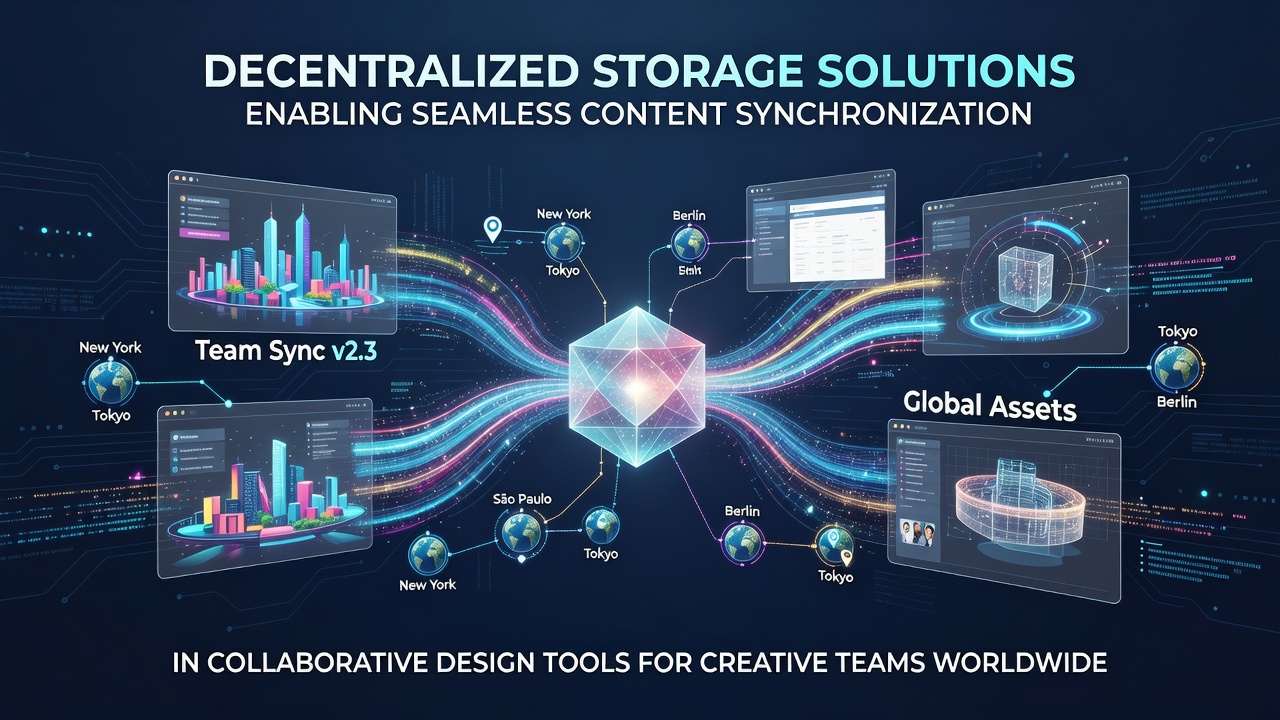
Decentralized storage systems distribute data across multiple nodes rather than relying on single central servers, and this architecture supports continuous synchronization of design files in collaborative tools used by creative teams spread across continents. Teams working on shared projects in graphic design, 3D modeling, and digital media now access updates without traditional upload-download cycles because protocols like IPFS and similar distributed ledgers maintain version consistency through content-addressed hashing.
How Decentralized Architectures Handle Real-Time Updates
Content-addressed storage assigns unique identifiers to files based on their actual data, which means any modification creates a new address while previous versions remain accessible; creative platforms integrate these mechanisms so that changes made in one location propagate to connected users through peer-to-peer replication instead of centralized push notifications. Observers note that this approach reduces single points of failure, and data remains available even when individual nodes experience downtime because redundant copies exist across the network.
Design tools incorporate these storage layers through APIs that abstract the underlying distribution process, allowing users to focus on creative output while the system manages conflict resolution via timestamped merges or consensus algorithms. In July 2026 several platforms reported expanded adoption of such integrations following updates that improved latency for high-resolution asset handling.
Global Team Collaboration Patterns
Creative groups operating across time zones benefit when files stay synchronized without requiring constant internet connectivity to a primary server, since local nodes cache relevant content and exchange deltas only when connections become available. Researchers tracking usage patterns have documented how teams in Asia, Europe, and the Americas maintain parallel workstreams on shared assets, with synchronization occurring automatically upon reconnection.
One case involved a multinational animation studio that shifted portions of its workflow to decentralized backends, resulting in measurable decreases in version conflicts according to internal metrics shared in industry forums. Data from network monitoring services indicate that average sync times for files under 500 megabytes dropped by measurable percentages when distributed protocols replaced traditional cloud storage in comparable environments.
Technical Components Supporting Design Workflows
Encryption layers wrap files before distribution so that only authorized participants with the correct keys can decrypt content, and access controls integrate with existing identity systems used by design software. Metadata about file relationships travels alongside the assets, enabling tools to reconstruct project structures even when pieces arrive from different network participants.

Bandwidth efficiency improves because only changed portions of files transmit across the network rather than complete replacements, and this incremental approach aligns well with the iterative nature of design work where small adjustments occur frequently. Studies from academic institutions including those affiliated with Canadian research consortia have examined how these efficiencies scale when team sizes exceed fifty concurrent editors.
Integration Examples Across Platforms
Several collaborative design environments now offer optional connections to decentralized storage providers, letting teams select storage backends based on project requirements such as permanence guarantees or regional data residency preferences. These integrations appear in both open-source projects and commercial offerings, with developers exposing configuration options that map local project folders directly to distributed hashes.
Industry reports compiled by organizations like the Web3 Foundation highlight growing developer interest in standardizing these connections, and early implementations have demonstrated compatibility with established formats like PSD and SVG without requiring format conversions. What's interesting is that synchronization remains consistent even when participants use different operating systems or client versions because the underlying addressing scheme operates independently of local software environments.
Security and Availability Considerations
Distributed networks provide resilience against targeted outages because no single jurisdiction controls all nodes, yet teams must still manage key distribution and permission models to prevent unauthorized access. Government sources from the European Union have issued guidance documents on data handling in decentralized systems that creative organizations reference when establishing compliance procedures.
Availability metrics published in technical papers show that properly configured networks maintain uptime above 99 percent for stored content when node diversity remains high, and creative teams leverage this characteristic for projects requiring long-term asset preservation without recurring hosting fees.
Conclusion
Decentralized storage continues to expand within collaborative design ecosystems by addressing synchronization challenges that centralized systems encounter at global scale. Teams gain consistent access to evolving assets through content-based addressing and peer replication, while security models adapt to distributed environments through encryption and selective access controls. As adoption grows, the underlying protocols support the fluid workflows that creative professionals require across multiple regions and time zones.