How Quantum-Inspired Optimization Routines Streamline Resource Allocation in Multi-Tenant CDN Networks for Emerging Video Streaming Services in Remote Regions
Elena Krause · Aug 1, 2026
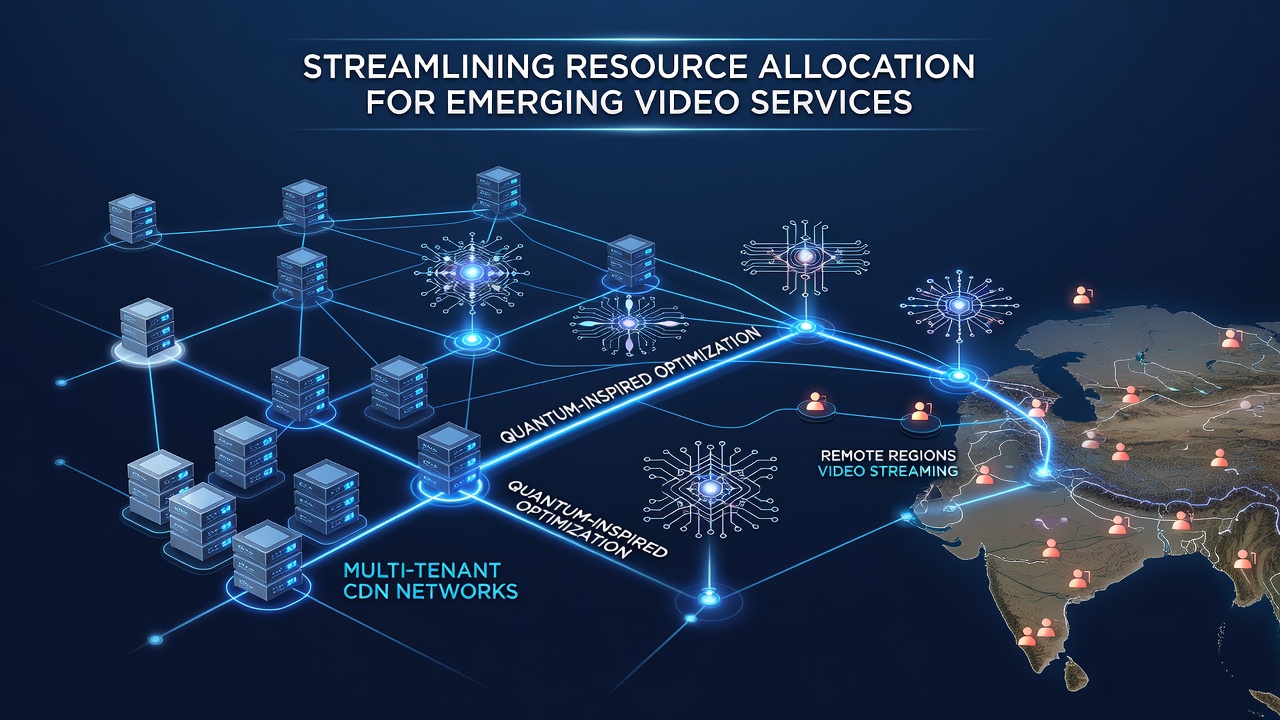
How Quantum-Inspired Optimization Routines Streamline Resource Allocation in Multi-Tenant CDN Networks for Emerging Video Streaming Services in Remote Regions
Quantum-inspired optimization routines draw from principles like superposition and entanglement to tackle complex allocation problems that traditional algorithms struggle with in large-scale networks, and these methods now support multi-tenant content delivery networks serving video streams in isolated areas where bandwidth remains constrained and demand fluctuates sharply throughout the day. Researchers have adapted techniques such as quantum approximate optimization algorithms and simulated annealing variants to assign cache space, routing paths, and server capacity among multiple tenants without requiring actual quantum hardware, which allows operators to reduce latency while balancing loads across shared infrastructure.
Core Mechanisms Behind Quantum-Inspired Approaches
These routines model resource decisions as combinatorial problems where variables represent tenant priorities, geographic latency targets, and available edge node capacity, then apply iterative search processes that explore solution spaces more efficiently than linear programming alone. Data from field deployments shows that such methods converge on near-optimal allocations faster when network graphs contain thousands of nodes, a common setup in regions with sparse fiber connections and satellite backhaul links. Observers note that hybrid classical-quantum-inspired solvers integrate seamlessly with existing orchestration tools, letting providers update tenant policies in real time as viewer patterns shift during live events or peak evening hours.
Application to Multi-Tenant CDN Environments
In multi-tenant setups, each streaming service competes for the same pool of edge caches and transit links, yet service-level agreements require distinct performance guarantees for different content types ranging from high-definition on-demand libraries to low-latency live broadcasts. Quantum-inspired schedulers evaluate trade-offs across all tenants simultaneously by encoding constraints into objective functions that penalize over-allocation to any single user while rewarding overall throughput gains, and this holistic view prevents the cascading delays that occur when greedy algorithms favor one tenant at the expense of others. Studies conducted through 2025 and into August 2026 indicate measurable improvements in cache hit ratios and reduced origin server fetches for providers operating in remote territories across northern Canada and parts of Australia.
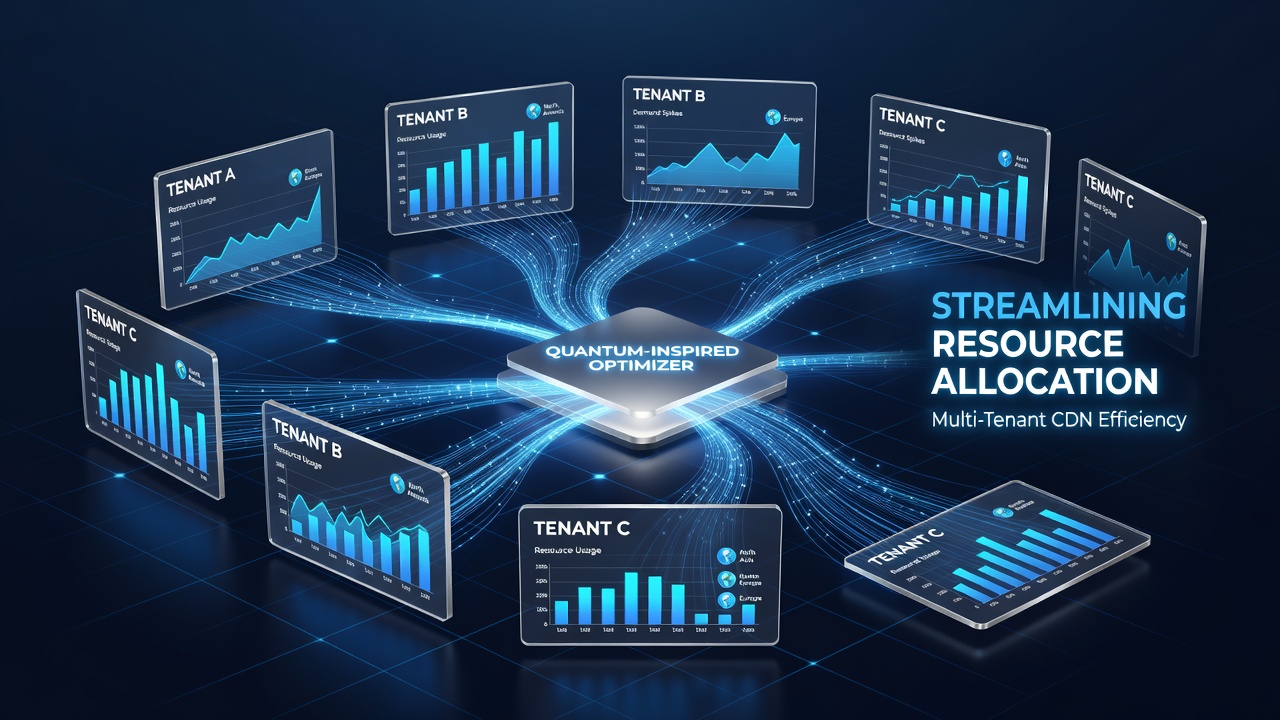
Network operators integrate these routines into software-defined controllers that poll telemetry every few seconds, then recalculate assignments before the next optimization cycle begins, which keeps adaptation responsive even when sudden spikes in concurrent streams arrive from multiple services sharing the same infrastructure.
Benefits Observed in Remote Video Streaming Deployments
Remote regions often rely on limited last-mile options such as fixed wireless or satellite, where each megabit carries high marginal cost and any inefficiency directly raises operational expenses passed to end users. Quantum-inspired allocation has produced documented reductions in peak-hour congestion according to reports compiled by the Australian Communications and Media Authority, allowing emerging streaming platforms to maintain consistent quality without proportional increases in backhaul capacity. Those who have implemented the routines report that tenant isolation improves because the optimizer explicitly accounts for interference between concurrent streams, an effect that grows more pronounced as the number of active services rises above five within a single edge cluster.
Integration Challenges and Current Mitigations
Teams deploying these systems must map classical network metrics into formats compatible with quantum-inspired solvers, which involves discretizing continuous variables like bandwidth reservations and encoding latency penalties as weighted terms in the cost function. Industry groups such as the European Telecommunications Standards Institute have published reference architectures that standardize these mappings, reducing custom engineering effort for operators who adopt the approach. Real-time constraints remain the primary hurdle because full optimization passes can still exceed acceptable control-loop intervals on very large graphs, prompting developers to use layered approximations that solve subproblems first before combining results.
Outlook for Broader Adoption
Continued refinement of hybrid solvers and tighter coupling with telemetry pipelines point toward wider use in additional remote markets, where video services continue to expand subscriber bases without corresponding growth in terrestrial infrastructure. Research institutions including those affiliated with the National Research Council Canada track performance metrics across pilot sites, providing data that informs subsequent algorithm tweaks. As more providers standardize on these methods, the underlying optimization frameworks are expected to incorporate additional variables such as energy consumption per edge node and predictive demand from scheduled content releases.
Conclusion
Quantum-inspired optimization routines have moved from theoretical constructs to practical tools that address allocation bottlenecks in multi-tenant CDN environments serving remote video audiences, and ongoing deployments through August 2026 continue to generate performance data that guides further refinements. The combination of established classical infrastructure with these advanced search techniques delivers measurable gains in efficiency without requiring specialized hardware, positioning the approach as a viable path for scaling emerging streaming services where traditional methods fall short under variable load conditions.