How Voice Search Patterns Are Reshaping Keyword Strategies for Local Service Directories in Multilingual Regions
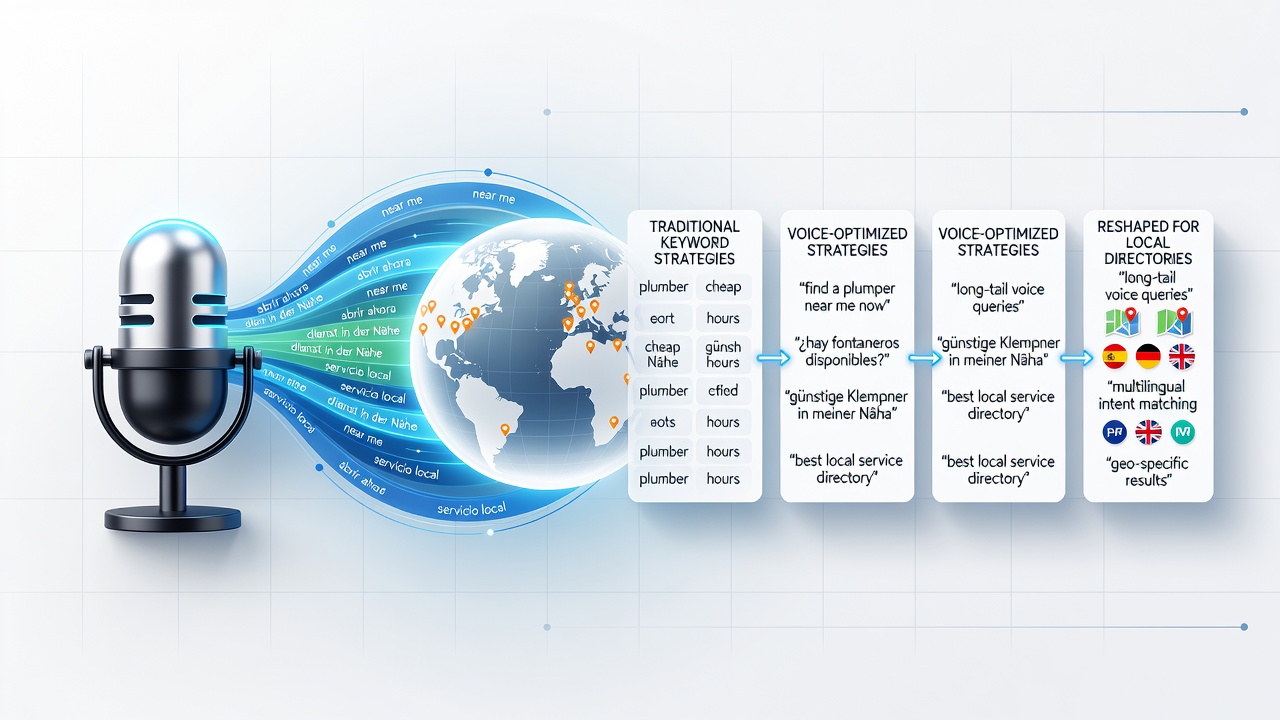
Voice search has altered how users interact with local service directories in regions where multiple languages coexist on a daily basis, and data from industry reports shows longer, conversational phrases replacing short keyword strings in many queries. Researchers tracking these shifts note that people in areas like Quebec and parts of Western Europe often speak queries in their preferred language while expecting results that account for regional dialects and service availability.
Voice Query Characteristics in Multilingual Settings
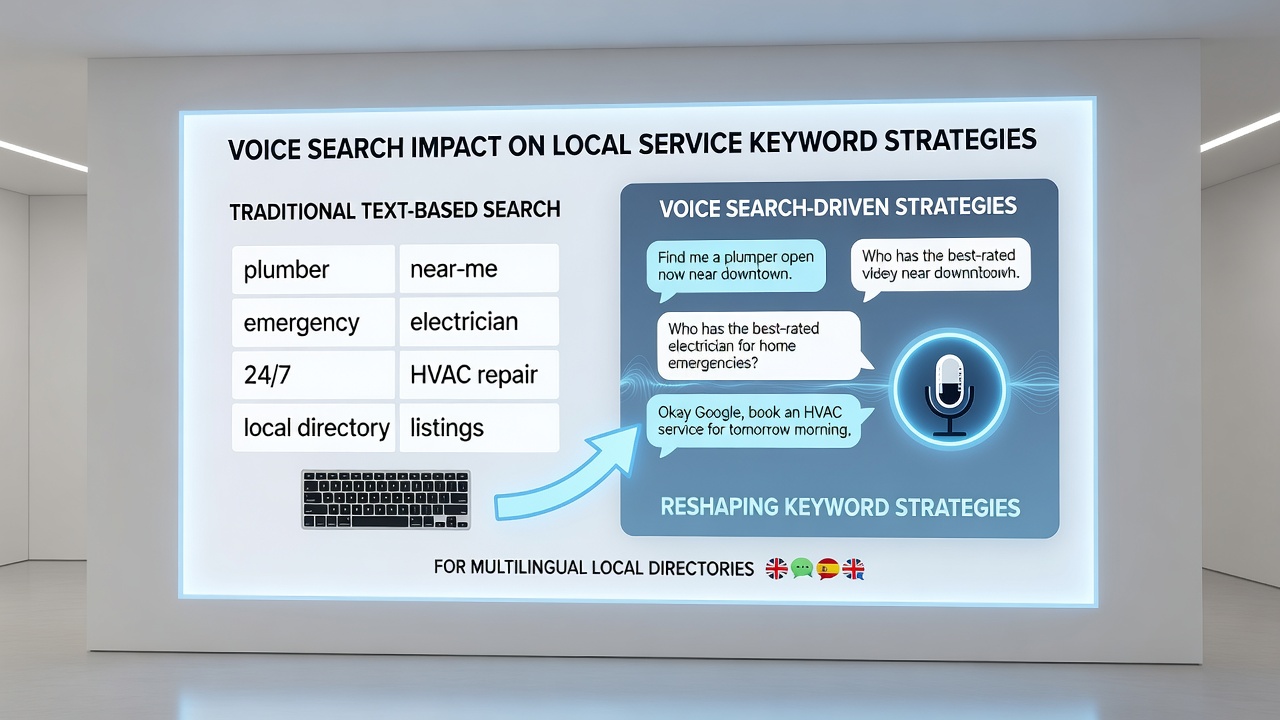
Studies from academic institutions reveal that voice searches tend to include complete questions rather than fragments, such as asking for "the nearest plumber who speaks Spanish near me" instead of typing "plumber Spanish." This pattern holds in July 2026 across directories serving communities in Canada and the European Union, where users switch languages mid-conversation based on the service needed. Observers note that directories must index content for both formal and colloquial terms to match these spoken inputs accurately.
Keyword Adaptation Strategies
Local directories have adjusted their optimization approaches by incorporating natural language variations and location-specific phrases that reflect spoken habits, and evidence from search analytics indicates higher visibility when entries include full-sentence equivalents alongside traditional terms. Companies managing these platforms now prioritize long-tail phrases that capture intent in multiple languages simultaneously, which helps surface results even when accents or code-switching occur in the query.
Regional Data Patterns
Figures from government statistical agencies in bilingual nations demonstrate that voice-driven traffic to service listings rose notably between 2024 and 2026 in areas with official multilingual policies, and this growth correlates with directories that updated their metadata to handle language transitions fluidly. One analysis of user logs found that queries mixing languages increased by measurable percentages in urban centers, prompting updates to backend indexing systems.
Technical Adjustments for Directories
Developers working on these platforms integrate natural language processing tools that detect language switches within single voice inputs, and reports from technology research groups confirm that such features improve match rates for listings like medical clinics or repair services. Directories serving regions with three or more active languages have expanded their schema markup to include synonyms and phonetic spellings that align with common pronunciations.
Examples from Specific Markets
In one documented case, a directory covering services across Swiss cantons revised its keyword database after reviewing voice logs, which revealed frequent use of dialect terms alongside standard German, French, and Italian phrases. Similar updates occurred in Australian directories handling queries from Indigenous language communities alongside English, where researchers documented the need for culturally specific service descriptors to maintain relevance.
Conclusion
Voice search continues to influence how local service directories structure their keyword frameworks in multilingual zones, with ongoing data collection showing adaptations centered on conversational phrasing and language flexibility. These changes reflect measurable shifts in user behavior tracked through 2026, guiding directories toward systems that process spoken inputs across linguistic boundaries without requiring separate searches.