Integration Challenges of Blockchain Ledgers in Traditional Content Management Systems for Digital Asset Tracking
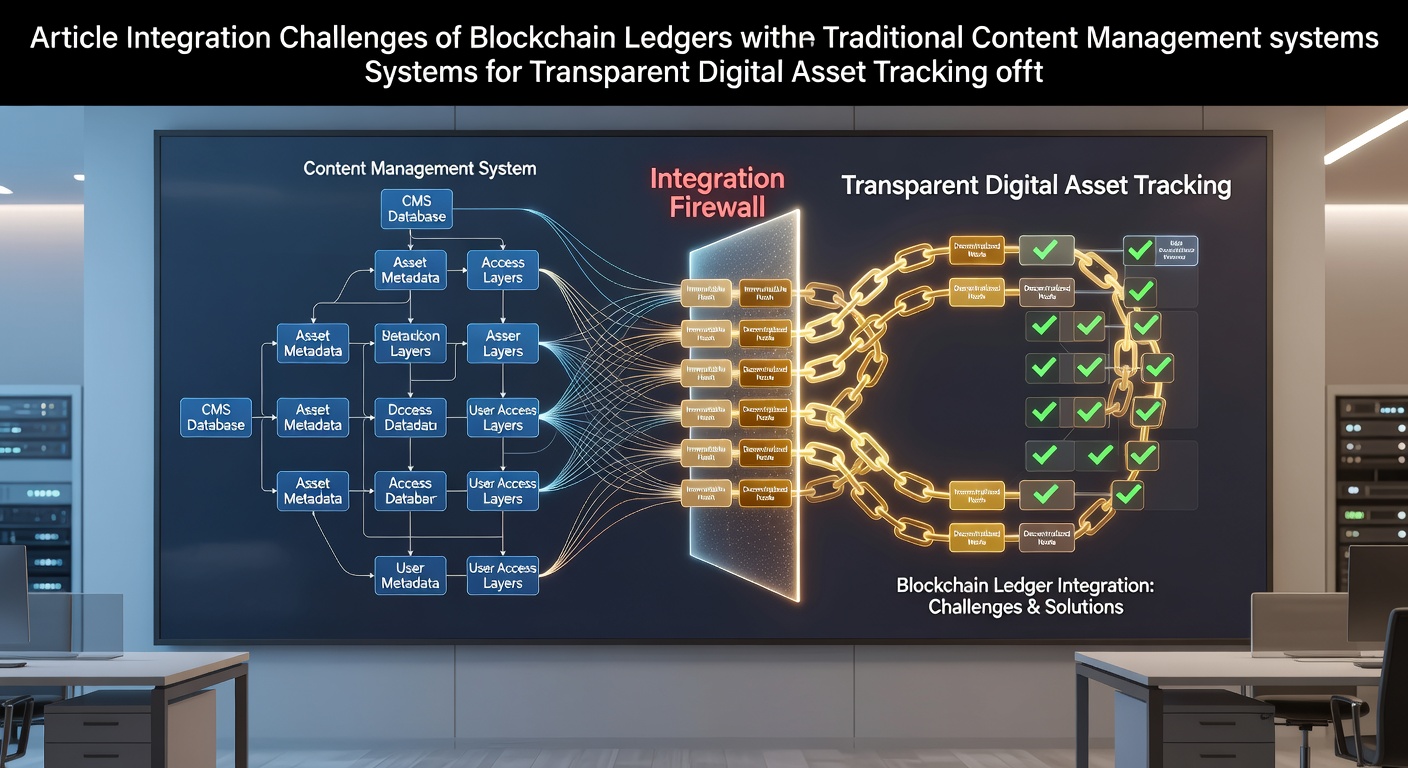
Traditional content management systems handle vast repositories of digital assets every day, yet many organizations now seek to layer blockchain ledgers onto these platforms to create verifiable chains of custody and transparent ownership records. The process brings together two architectures that evolved separately, one optimized for rapid content updates and the other for immutable distributed consensus, which creates friction points that technical teams must resolve before full deployment becomes feasible.
Core Technical Compatibility Issues
Most established content management platforms rely on relational databases and centralized APIs that process requests in milliseconds, while blockchain networks operate through sequential block validation that introduces variable latency. Developers attempting direct integration often discover that standard CMS plugins lack native support for smart contract calls or on-chain event listeners, forcing custom middleware layers that translate between SQL queries and distributed ledger transactions. Research from the European Blockchain Services Infrastructure indicates that such middleware accounts for the majority of initial integration time in enterprise pilots completed through early 2026.
Schema mismatches further complicate matters because blockchain records store data in key-value formats optimized for cryptographic hashing, whereas CMS asset metadata typically follows flexible but non-standardized taxonomies. Teams must therefore design mapping layers that preserve query performance inside the content system while ensuring every mapped field remains provably unchanged once written to the ledger. Without careful synchronization, asset updates inside the CMS can diverge from their corresponding on-chain entries, undermining the very transparency the integration aims to deliver.
Performance and Scalability Pressures
High-volume content platforms frequently manage thousands of asset uploads and metadata changes per hour, yet public blockchain networks maintain throughput limits measured in transactions per second rather than per minute. Private or consortium chains offer higher capacity, but they require governance frameworks that many organizations have not yet established. Observers note that throughput bottlenecks become especially apparent during peak publishing cycles, when simultaneous CMS operations queue against slower block confirmation times and create noticeable delays for end users.
Storage costs present another constraint because every participating node must retain a complete or partial copy of the ledger. Traditional CMS infrastructures store large binary files in object storage or content delivery networks, while blockchain entries typically reference those files through hashes rather than hosting the files themselves. This hybrid approach reduces ledger bloat yet demands reliable off-chain storage that remains accessible and unaltered, adding operational overhead that scales with the number of tracked assets.

Data Privacy and Regulatory Alignment
Regulations such as the EU's GDPR and Canada's Personal Information Protection and Electronic Documents Act grant individuals rights to erasure and correction, yet data written to a blockchain ledger resists modification by design. Integration projects therefore require careful decisions about what information enters the immutable record and what remains in mutable CMS databases. Legal teams often mandate that personally identifiable information stay off-chain while only cryptographic proofs or anonymized identifiers move onto the ledger, a division that demands ongoing compliance monitoring as rules evolve.
In May 2026 several jurisdictions updated guidance on distributed ledger use for intellectual property tracking, prompting organizations to revisit earlier integration designs that had placed more metadata directly on-chain. Those updates highlighted the need for modular architectures where ledger entries can reference revocable off-chain attestations without breaking historical verification chains.
Security Models and Access Control
Content management systems typically manage permissions through role-based access controls tied to organizational directories. Blockchain networks instead rely on cryptographic key pairs and consensus rules that do not automatically align with those directory services. Mapping CMS user roles to blockchain accounts introduces key management challenges, including secure key generation, rotation policies, and recovery mechanisms when personnel change roles or leave the organization. Without robust key governance, the transparency benefit of the ledger can be compromised by unauthorized or orphaned transactions.
Smart contract vulnerabilities represent an additional exposure vector once integration reaches the execution layer. Traditional CMS environments undergo regular security patching cycles managed by platform vendors, whereas deployed contracts require separate auditing and upgrade procedures that many development teams have not yet incorporated into their release processes. Reports from the Australian Digital Transformation Agency emphasize that organizations adopting hybrid CMS-blockchain stacks allocate increasing portions of their security budgets to contract review rather than conventional application testing.
Organizational and Skill Requirements
Beyond technical hurdles, successful integration depends on cross-functional teams that combine CMS administrators, blockchain developers, legal specialists, and data architects. Many enterprises find these skill sets reside in separate departments with limited prior collaboration, lengthening project timelines. Training programs focused on distributed ledger concepts have expanded at universities and professional institutes, yet practical experience integrating these systems with legacy content platforms remains concentrated among a smaller group of specialists.
Conclusion
Organizations pursuing transparent digital asset tracking through blockchain-augmented content management systems encounter layered challenges spanning technical compatibility, performance limits, privacy compliance, and governance. Progress continues through modular middleware, selective on-chain storage, and evolving regulatory frameworks that accommodate both immutability and individual rights. Data from ongoing pilots shows measurable improvements in auditability once integration patterns stabilize, although full standardization across platforms is still developing.