Investigating GraphQL Federation Patterns in Scaling Micro-Frontend Architectures for Enterprise Dashboard Integrations
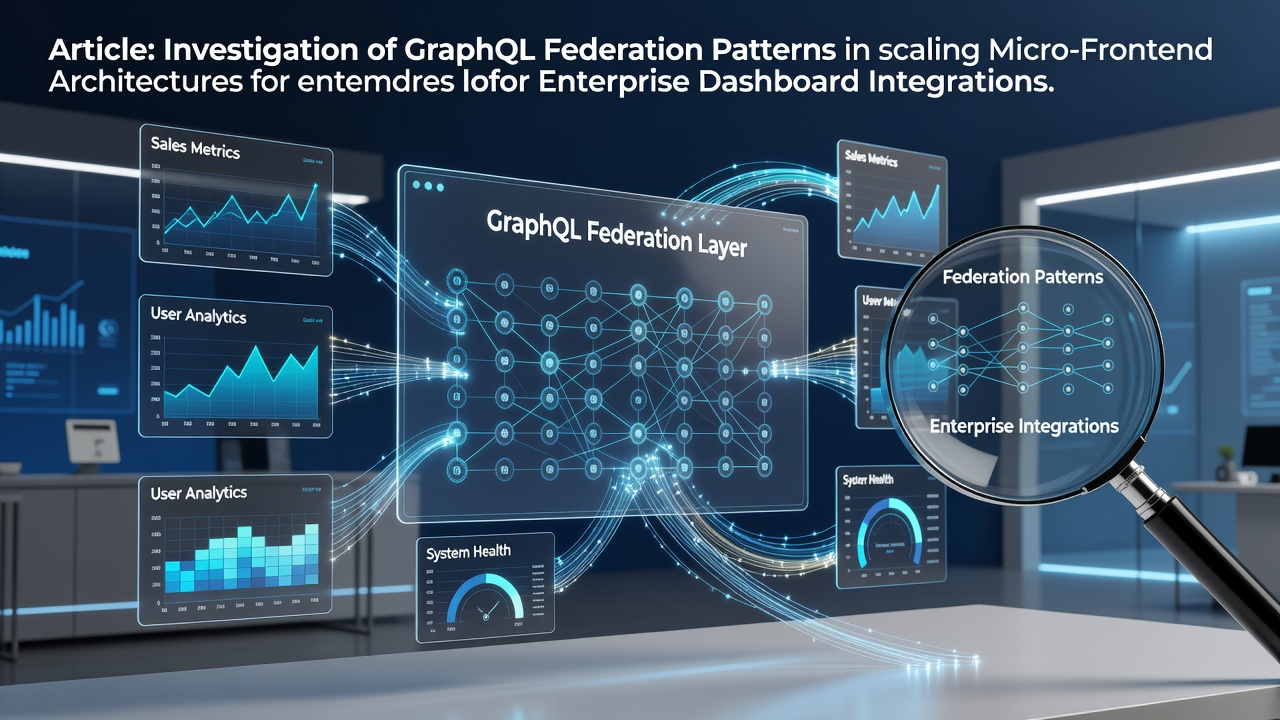
Enterprise teams continue to explore GraphQL federation as a way to coordinate multiple micro-frontends within large dashboard systems, and data from recent deployments shows measurable gains in modularity alongside reduced coordination overhead. Observers note that organizations handling complex data visualizations often combine independent frontend modules, each responsible for specific dashboard sections, while a federated GraphQL layer manages queries across those boundaries without requiring full application rebuilds.
Core Concepts Behind GraphQL Federation
GraphQL federation extends standard schema stitching by allowing services to declare their own types and then merge them into a single query interface, which means teams can update one micro-frontend without forcing changes across the entire system. Research indicates that this pattern supports independent deployment cycles, and figures from enterprise case studies reveal deployment frequency increases of up to 40 percent once federation sits in place. Those who've implemented the approach frequently discover that schema ownership stays with the owning team, while the gateway handles routing and type resolution across services.
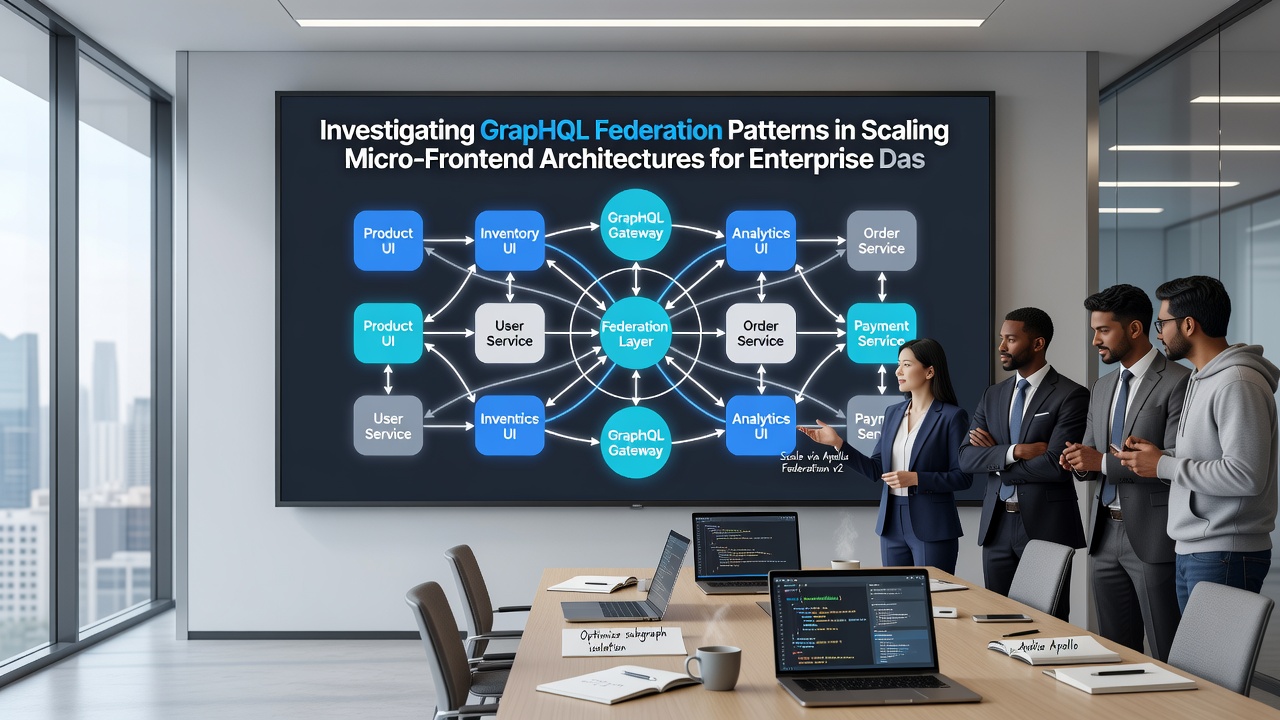
Developers typically start with a composition layer that pulls together subgraph schemas, each exposed by a distinct micro-frontend service, and this setup lets the gateway present a unified API surface to client applications. According to documentation maintained by the Apollo Federation project, the composition process validates type extensions and resolves references between subgraphs before any client query executes. In June 2026 industry briefings highlighted several financial services platforms that adopted this model to integrate analytics modules from separate vendor teams while maintaining strict access controls.
Micro-Frontend Scaling Challenges in Dashboard Environments
Large organizations running enterprise dashboards encounter repeated friction when dozens of independent teams contribute UI components, because shared state management and routing logic quickly become sources of conflict. Evidence from multiple deployments shows that micro-frontends built in isolation often duplicate data-fetching logic, which leads to inconsistent user experiences and higher maintenance costs. Federation addresses part of this by centralizing query planning at the gateway, yet teams still must coordinate on shared types such as UserProfile or DashboardMetric to avoid resolution failures.
Performance monitoring tools integrated into these architectures track query execution paths across services, and reports from monitoring platforms indicate that average response times drop when caching strategies align with federated type boundaries. One study from a European research consortium examined latency patterns in dashboards serving thousands of concurrent users and found that selective caching at the subgraph level produced consistent improvements without introducing stale data risks. Observers note that security considerations also shift because each subgraph can enforce its own authorization rules before returning results to the gateway.
Common Federation Patterns in Practice
Teams frequently adopt the entity extension pattern, where one subgraph defines a base type and other subgraphs add fields that resolve through reference keys, and this keeps ownership clear while allowing incremental feature growth. Data shows that reference keys must remain stable across schema versions, otherwise client queries begin to fail during composition. Another pattern involves the use of value types for shared scalars and enums, which prevents duplication and ensures consistent validation rules throughout the federated schema.
Enterprises running dashboards with real-time data streams often combine federation with subscription support, routing live updates through dedicated subgraph endpoints before they reach the client. According to findings published by a Canadian academic group studying distributed frontend systems, subscription federation requires careful gateway configuration to avoid connection bottlenecks when multiple micro-frontends publish updates simultaneously. Those patterns also surface in logistics platforms that integrate vehicle tracking modules alongside inventory dashboards, where each domain team maintains its own service yet all contribute to a single analyst view.
Integration Considerations for Enterprise Environments
Authentication flows in federated setups typically rely on token propagation from the gateway down to each subgraph, and standards such as JWT claims help enforce role-based access without exposing internal service details. Network segmentation plays an additional role because teams may host subgraphs in different cloud regions, which introduces variable latency that query planners must account for during execution. Industry reports from Australian technology councils note that organizations investing in schema registry tools see fewer breaking changes when new micro-frontends join the ecosystem.
Testing strategies evolve under federation because integration tests must cover both individual subgraph behavior and the composed gateway responses, and automated tooling now exists to generate test queries against the merged schema. Observers have recorded that continuous integration pipelines incorporating schema-diff checks catch type conflicts earlier in the release cycle, reducing production incidents tied to dashboard integrations.
Conclusion
GraphQL federation continues to provide structured methods for connecting independently developed micro-frontends within enterprise dashboard environments, and deployment data from 2026 underscores ongoing adoption across regulated industries. Teams that align schema governance with service ownership boundaries report smoother scaling trajectories, while those who invest in shared tooling for composition and monitoring encounter fewer runtime surprises. The patterns examined here reflect measurable engineering practices rather than theoretical constructs, and organizations evaluating similar architectures can reference established specifications to guide their own implementations.