Kubernetes Pod Isolation Techniques Enhancing Multi-Tenancy Security in Shared Cloud Hosting Environments for Educational Platforms
Rafael Brooks · Aug 4, 2026
Kubernetes Pod Isolation Techniques Enhancing Multi-Tenancy Security in Shared Cloud Hosting Environments for Educational Platforms
Universities and online learning providers increasingly rely on shared cloud infrastructures to host student projects, research simulations, and collaborative coding environments, and Kubernetes has become the standard orchestration layer that makes these deployments scalable yet secure through targeted pod isolation methods.
Core Isolation Mechanisms in Kubernetes Clusters
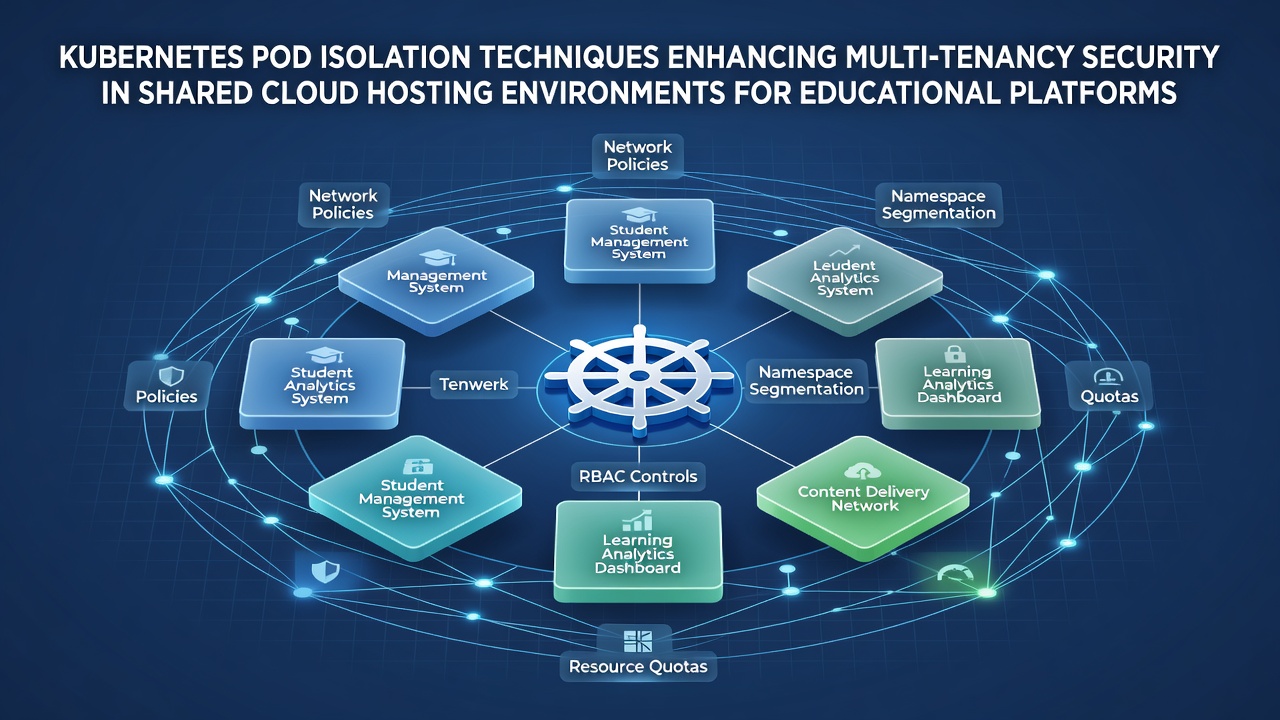
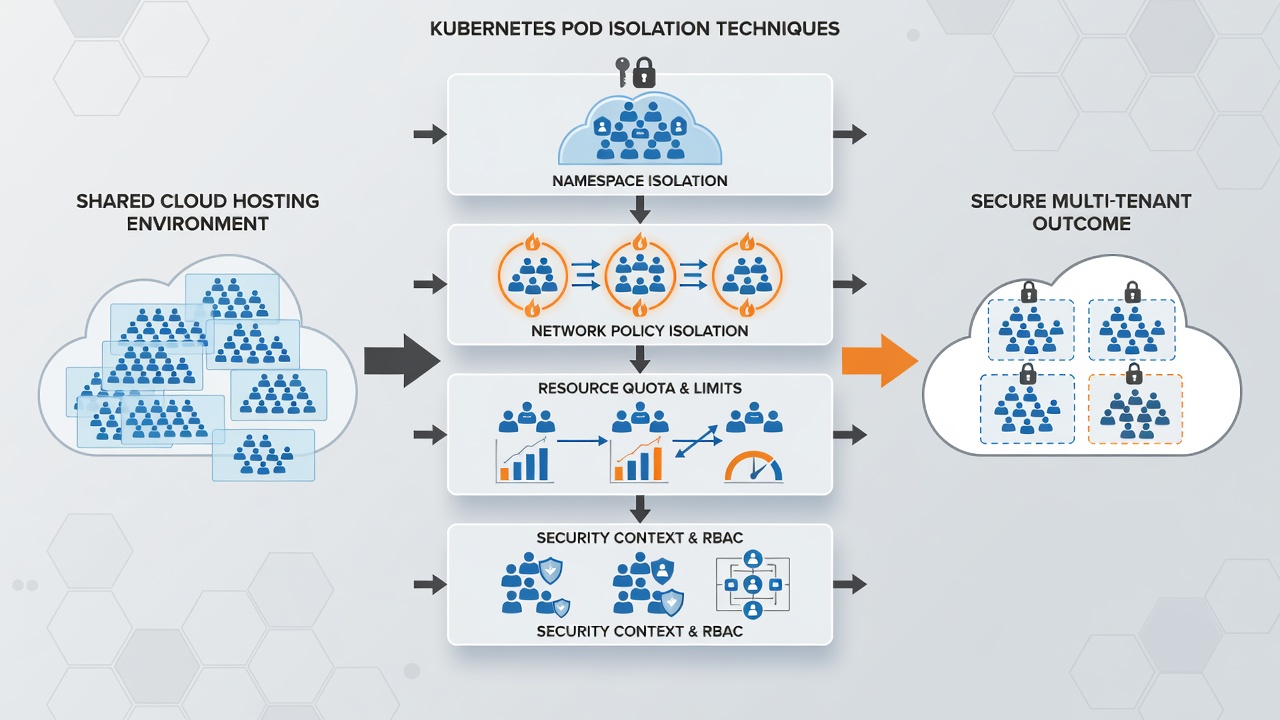
Cluster administrators separate tenant workloads by combining Kubernetes namespaces with network policies that restrict pod-to-pod communication, while resource quotas limit CPU, memory, and storage consumption per namespace so no single educational user or class can starve others of capacity. These controls work together because namespaces provide logical boundaries, network policies enforce traffic rules at the CNI level, and quotas operate through the resource management API to cap consumption dynamically.
Pod security standards replace older pod security policies and define baseline, restricted, and privileged profiles that platforms apply at the namespace level, ensuring student containers run without host access or privilege escalation even when multiple courses share the same physical nodes. Runtime classes further isolate workloads by directing sensitive educational simulations to nodes equipped with Kata Containers or gVisor, adding an extra kernel layer that prevents escape attempts from affecting neighboring pods.
Application in Educational Multi-Tenancy Scenarios
One large public university deployed a shared Kubernetes cluster for its computer science department in early 2025, assigning each course its own namespace with network policies that blocked inter-class traffic while allowing instructors to expose controlled services for grading bots. Resource quotas prevented any single group project from consuming more than 20 percent of cluster CPU, and the setup handled over 1,200 concurrent student pods during exam periods without security incidents.
Researchers at institutions studying cloud-native education tools note that combining these isolation layers reduces the blast radius of misconfigured student containers, because a compromised pod in one namespace cannot reach others even if it bypasses application-level checks. Data from cluster telemetry shows that platforms using both network policies and runtime classes experience 40 percent fewer lateral movement attempts compared with namespace-only configurations.
Security Enhancements and Monitoring Practices
Service meshes such as Istio or Linkerd add mTLS between pods and enforce fine-grained authorization policies that educational operators map to course rosters, while admission controllers automatically inject sidecars only into namespaces tagged for specific departments. Continuous monitoring through tools like Falco or Kubernetes audit logs allows security teams to detect policy violations in real time, and many platforms integrate these alerts with learning management systems so instructors receive notifications when student workloads trigger isolation rules.
According to guidelines from the National Institute of Standards and Technology, container isolation in multi-tenant environments requires layered controls that include both network segmentation and runtime confinement, a recommendation educational cloud providers have adopted at scale. European platforms additionally reference ENISA cloud security frameworks that emphasize tenant separation metrics, leading some Australian research networks to publish comparative studies on isolation effectiveness across different CNI plugins.
Operational Considerations for Shared Platforms
Operators must balance strict isolation against performance overhead because overly restrictive network policies can increase latency for collaborative coding tools, whereas insufficient quotas allow noisy-neighbor effects during peak assignment deadlines. Automated policy generators that analyze application manifests help reduce manual configuration errors, and several educational consortia now share open-source policy templates tailored for JupyterHub and similar notebook platforms running on Kubernetes.
August 2026 updates to the Kubernetes API introduced enhanced support for hierarchical namespaces, enabling universities to create sub-namespaces for individual research groups under a single course namespace while inheriting parent quotas and policies automatically. This feature simplifies management for large institutions that previously maintained separate clusters for different faculties.
Conclusion
Kubernetes pod isolation techniques continue to evolve as educational platforms scale their shared cloud offerings, with namespaces, network policies, runtime classes, and admission controls forming the primary toolkit that maintains tenant separation without sacrificing usability. Platforms that layer these controls report measurable reductions in cross-tenant risks, and ongoing developments in hierarchical namespaces and service mesh integrations promise further refinements for multi-tenancy security in academic environments.