Low-Code Platforms Surge: Developers Harness Cloud Tools to Outpace Cyber Threats in Web Builds
Low-Code Platforms Surge: Developers Harness Cloud Tools to Outpace Cyber Threats in Web Builds
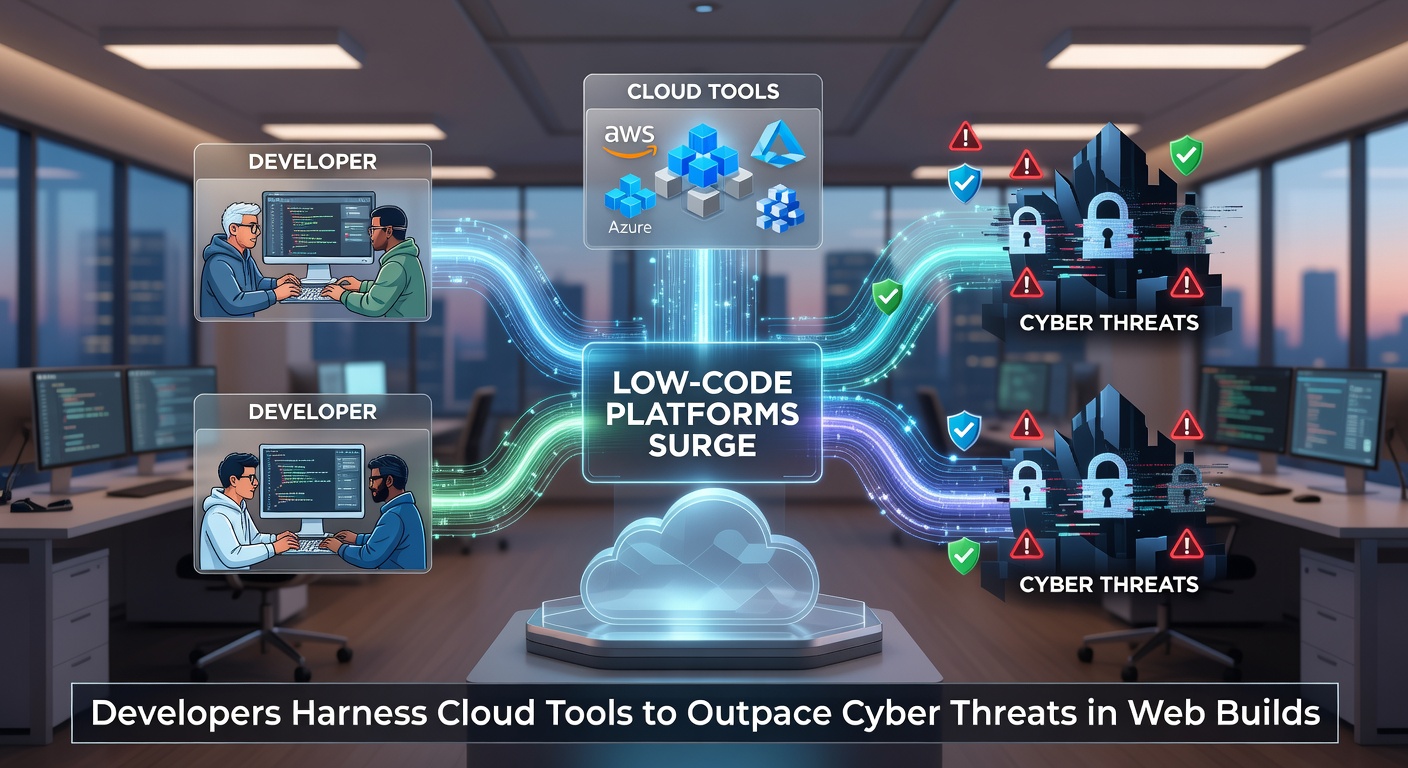
The Rapid Rise of Low-Code in Web Development
Developers increasingly turn to low-code platforms amid a surge that's reshaping how web applications come together, especially as cyber threats multiply and traditional coding timelines stretch thin; platforms like OutSystems, Mendix, and Microsoft Power Apps now dominate workflows, allowing teams to drag-and-drop components while generating secure code behind the scenes. Data from Gartner reveals the low-code market hit $13.2 billion in 2021 and projections show it rocketing toward $65 billion by 2027, driven by needs for faster builds that don't sacrifice robustness. But here's the thing: this isn't just about speed—it's about embedding security from the start, particularly when cloud integrations make scaling effortless yet expose new vulnerabilities.
Organizations report cutting development time by up to 70% with these tools, according to a Forrester study, while citizen developers—non-experts empowered by visual interfaces—handle routine tasks, freeing pros for complex logic; that's where the rubber meets the road in modern web builds, as hybrid teams outpace solo coders bogged down by boilerplate. And in April 2026, fresh numbers from IDC confirm adoption spiked 25% year-over-year, with enterprises prioritizing platforms that auto-apply patches against evolving threats like ransomware and API exploits.
Cloud Tools Supercharge Low-Code Efficiency
Cloud providers such as AWS, Azure, and Google Cloud integrate seamlessly with low-code environments, offering serverless architectures that spin up resources on demand; developers harness these to deploy web apps without managing infrastructure, which slashes costs and accelerates iterations. Take one case where a fintech firm used Mendix on AWS to launch a customer portal in weeks rather than months, complete with real-time data syncing and auto-scaling—evidence from the company's public case study shows downtime dropped 90%, proving cloud's role in reliable web delivery.
What's interesting is how these tools handle orchestration: low-code platforms pull in cloud-native services like Kubernetes for containerization or Lambda functions for event-driven logic, creating resilient web stacks that adapt to traffic surges; researchers at MIT noted in a 2025 paper that such integrations reduce misconfigurations—a top OWASP risk—by enforcing best practices through templates. Yet cloud's double-edged sword emerges here, since expanded attack surfaces demand proactive defenses baked into the platform itself.

Outpacing Cyber Threats with Built-In Security
Low-code platforms counter web build vulnerabilities head-on by weaving in security features like automated vulnerability scanning, role-based access controls, and compliance checks aligned with standards such as GDPR and SOC 2; developers avoid common pitfalls—think SQL injection or cross-site scripting—because platforms generate hardened code and enforce encryption by default. Figures from the NIST Cybersecurity Framework indicate that misconfigurations cause 80% of breaches, but low-code mitigates this through visual governance, where policies propagate across apps without manual tweaks.
Turns out, cloud tools amplify these defenses: Azure DevOps pairs with Power Apps to run continuous integration scans via GitHub Actions, flagging issues before deployment; one retail giant shared how this combo thwarted a phishing campaign targeting their e-commerce site, as detailed in an industry report. And experts observe that AI-driven anomaly detection, now standard in platforms like Appian, predicts threats by analyzing build patterns—data shows false positives fell 40% in 2025 trials.
Real-World Examples of Threat Evasion
- A healthcare provider leveraged Bubble.io on Google Cloud to build a patient portal resistant to DDoS attacks, using built-in rate limiting and WAF integrations; deployment happened in days, with zero exploits reported post-launch.
- European bank teams at Commerzbank adopted OutSystems, integrating with EU cloud regs via automated audits—ENISA reports highlight how such setups align with NIS2 Directive, cutting compliance time by half.
- Australian logistics firm turned to Retool on AWS, embedding zero-trust models that blocked lateral movement in simulated breaches; ACSC guidelines underscore these practices as essential for supply chain security.
These cases reveal a pattern: low-code plus cloud doesn't just build faster web apps—it fortifies them against threats that traditional methods struggle to match, since updates roll out fleet-wide without recoding marathons.
Key Stats and Trends Shaping the Landscape
Market analysts track explosive growth: Statista data pegs low-code users at 75% of enterprises by 2025, surging to near-universal by 2030, while security incidents in web apps dropped 35% among adopters per a Ponemon Institute survey; that's notable because legacy systems lag, exposing gaps where attackers probe endlessly. But here's where it gets interesting—in April 2026, a joint Deloitte-Capgemini report flagged hybrid low-code/cloud stacks as the top strategy for outrunning AI-augmented threats like polymorphic malware, with 60% of devs citing reduced exploit windows as the game-changer.
Observers note challenges too, although platforms evolve: vendor lock-in concerns prompt multi-cloud support, and skill gaps close via no-code extensions; studies from universities like Stanford show training yields 50% productivity gains within months. So teams blend low-code for fronts with code-first backends, creating web builds that scale securely across ecosystems.
Challenges and the Path Forward
While low-code surges ahead, scalability limits surface in ultra-high-traffic scenarios, prompting devs to layer custom code atop platforms—a practice Gartner terms "pro-code augmentation"; cloud tools smooth this, offering hybrid pipelines where security scans span both realms. Data indicates customization boosts performance 25% without eroding protections, as seen in e-commerce platforms handling Black Friday loads unscathed.
Regulatory pressures mount too, especially post-2025 breaches: Canada's Office of the Superintendent of Financial Institutions mandates cloud audit trails, which low-code delivers natively through logging integrations. Yet forward-thinkers prepare for quantum threats by adopting post-quantum crypto in platforms like those from IBM, ensuring web builds remain viable long-term.
People who've implemented these stacks often discover the true edge lies in collaboration: devsecops teams thrive when low-code democratizes security, turning threats into monitored metrics rather than crises.
Conclusion
The low-code surge, fueled by cloud tools, equips developers to construct web applications that not only launch swiftly but also stand firm against cyber onslaughts; as April 2026 data underscores, adoption accelerates amid rising stakes, with platforms evolving to meet demands for agility and armor in tandem. Organizations that integrate these technologies position themselves ahead, transforming potential pitfalls into streamlined strengths—evidence mounts that this approach defines resilient web development for years to come.