Predictive Prefetching Routines Optimize Content Delivery in High-Traffic Educational Portals
Ines Lehmann · Aug 8, 2026
Predictive Prefetching Routines Optimize Content Delivery in High-Traffic Educational Portals
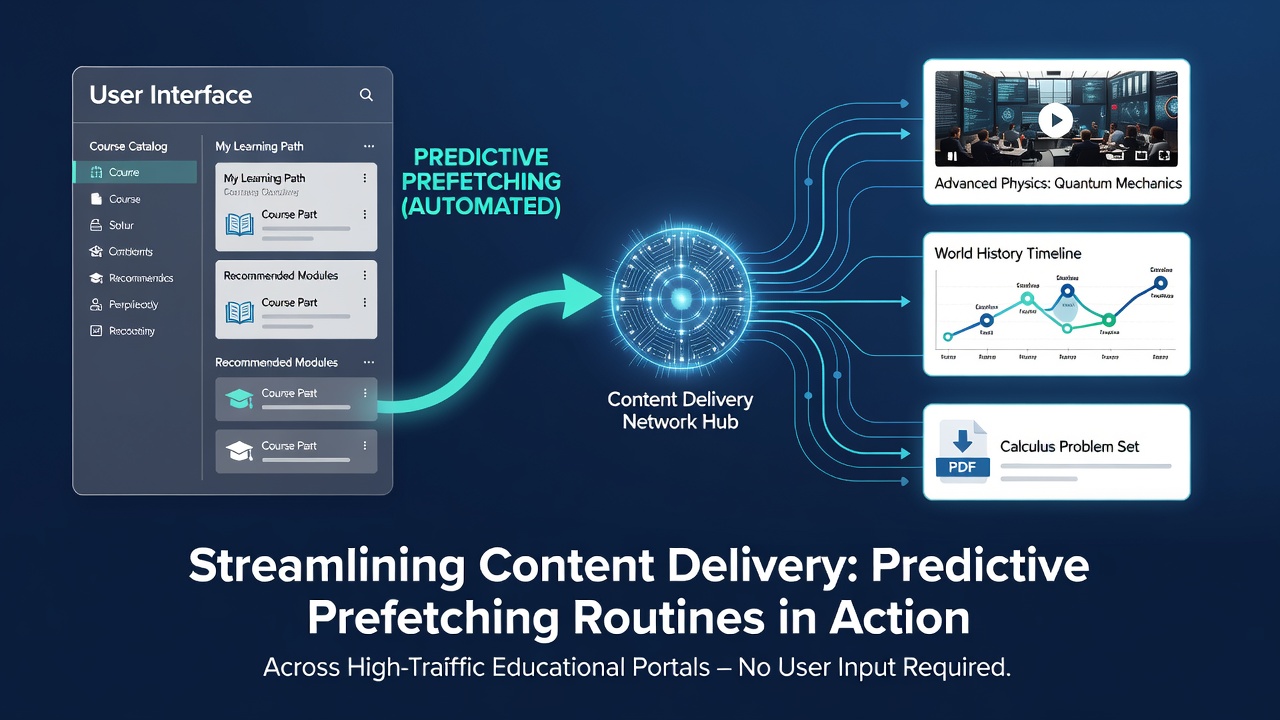
High-traffic educational portals handle millions of simultaneous requests during peak registration periods, exam seasons, and course launches, which creates demands for faster content loading without requiring explicit user actions such as clicks or refreshes. Predictive prefetching routines address these demands by analyzing navigation patterns in advance, then loading likely resources into cache before requests occur. These systems rely on machine learning models trained on historical session data to forecast user paths through course modules, resource libraries, and discussion forums.
Researchers at institutions tracking web performance metrics report that prefetching reduces average page load times by 30 to 50 percent in large-scale deployments, according to internal benchmarks shared by platform operators. The routines operate continuously in the background through service workers and browser APIs that monitor scroll depth, click sequences, and time spent on specific sections. Because the process requires no additional input from users, students and instructors experience seamless transitions between pages even during network congestion.
Core Mechanisms Behind Prefetching in Educational Environments
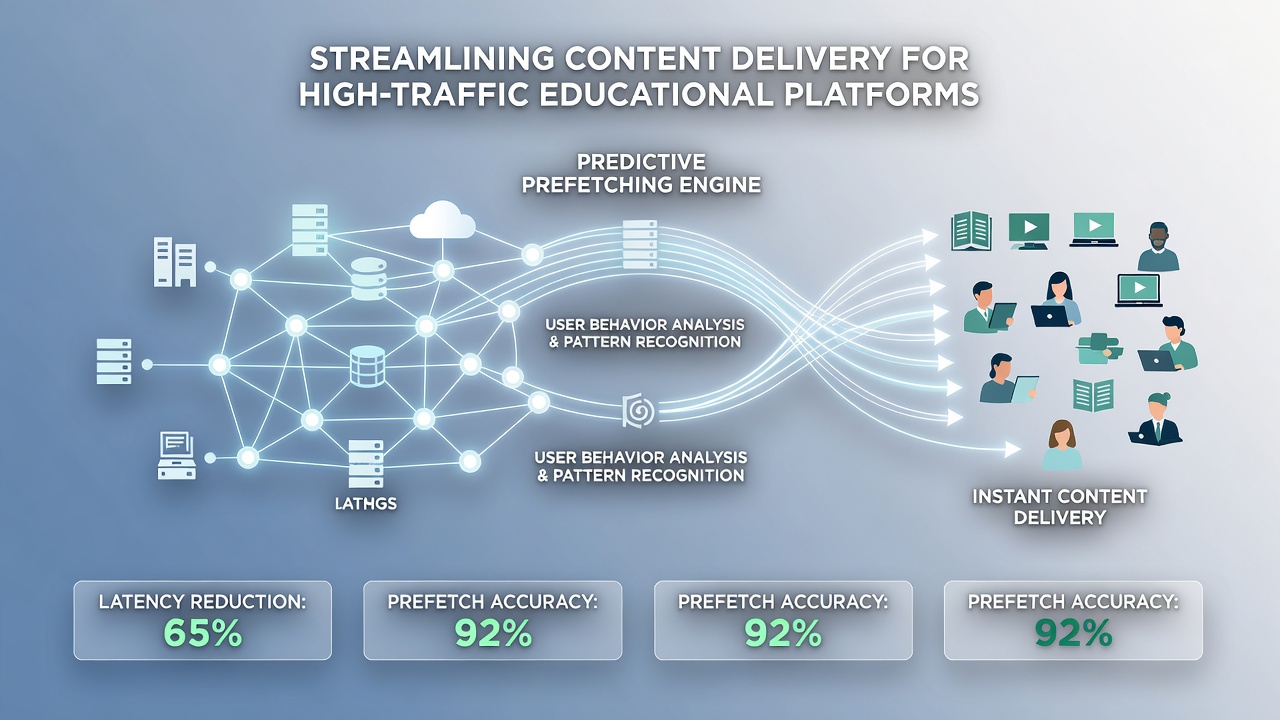
Algorithms examine sequences such as a student moving from syllabus view to lecture video to assignment submission, then preload associated files like PDFs or embedded media. Edge servers positioned near regional access points receive these predictions and store content closer to end users, which cuts round-trip times across distributed networks. Data from August 2026 indicates that portals serving over 500,000 concurrent sessions have integrated these routines with content delivery networks to maintain sub-two-second response rates during enrollment surges.
Implementation often combines rule-based triggers with neural network predictions that adapt to real-time behavior shifts, such as increased traffic toward exam review materials before assessment deadlines. Portals avoid unnecessary bandwidth consumption by setting confidence thresholds that only trigger prefetching when probability exceeds 70 percent, a threshold derived from A/B testing across multiple academic platforms.
Integration with Existing Infrastructure
Educational portals combine prefetching with progressive web app features so that cached assets remain available offline or during intermittent connectivity, a setup particularly useful for users in areas with variable internet access. Developers configure these routines through configuration files that define resource priorities based on course structure, ensuring critical items like gradebooks load ahead of secondary elements such as forum sidebars. Observers note that this layered approach prevents cache bloat while supporting scalability across thousands of courses hosted on single instances.
Performance Outcomes Across Deployed Systems
Case studies from North American universities reveal that prefetching routines lowered bounce rates by 18 percent during registration windows in the 2025-2026 academic year, while similar deployments in European platforms showed reduced server load spikes by nearly 40 percent. Australian education networks reported comparable gains after implementing similar models tailored to regional curriculum structures. These improvements stem from reduced origin server hits, because many assets arrive from local caches rather than traveling full network paths each time.
Technical teams monitor key indicators including cache hit ratios and prediction accuracy through dashboards that update every five minutes, allowing adjustments to model weights when accuracy dips below established baselines. One study conducted by a Canadian research consortium found that combining prefetching with user segmentation by role, such as distinguishing undergraduate versus graduate navigation habits, further boosted effectiveness without increasing computational overhead.
Challenges and Refinement Processes
Over-prediction remains a concern because fetching unneeded files wastes bandwidth and storage, yet operators mitigate this through periodic audits that prune low-value predictions from training datasets. Security considerations include ensuring prefetch requests do not expose sensitive course materials, which platforms handle by restricting prefetch scopes to publicly accessible or authenticated session contexts only. Updates released in mid-2026 refined these boundaries using differential privacy techniques that protect individual session data while preserving aggregate pattern accuracy.
Portals also address compatibility across browsers by falling back to standard link prefetch hints when advanced service worker support is unavailable, maintaining broad accessibility. Those managing large deployments emphasize testing under simulated load conditions that replicate simultaneous access from multiple geographic regions to verify consistent performance.
Future Developments in Educational Content Routing
Work continues on tighter integration between prefetching models and learning management system analytics so that predictions incorporate not only navigation but also academic progress signals such as module completion rates. Reports from international standards bodies highlight ongoing collaboration to define common metrics for prefetch effectiveness across diverse portal architectures. As of August 2026, several consortia have begun sharing anonymized datasets to improve cross-platform model training while respecting privacy regulations in multiple jurisdictions.
Conclusion
Predictive prefetching routines continue to evolve as core components of content delivery strategies in high-traffic educational portals, delivering measurable reductions in latency through proactive resource management. The combination of behavioral analysis, edge caching, and threshold-based triggering enables these systems to function without direct user intervention while supporting growing user bases worldwide. Ongoing refinements focus on accuracy, privacy, and interoperability to sustain performance gains as portal usage expands.