The Influence of Federated Database Systems on Global E-Learning Platform Scalability and Data Privacy Compliance
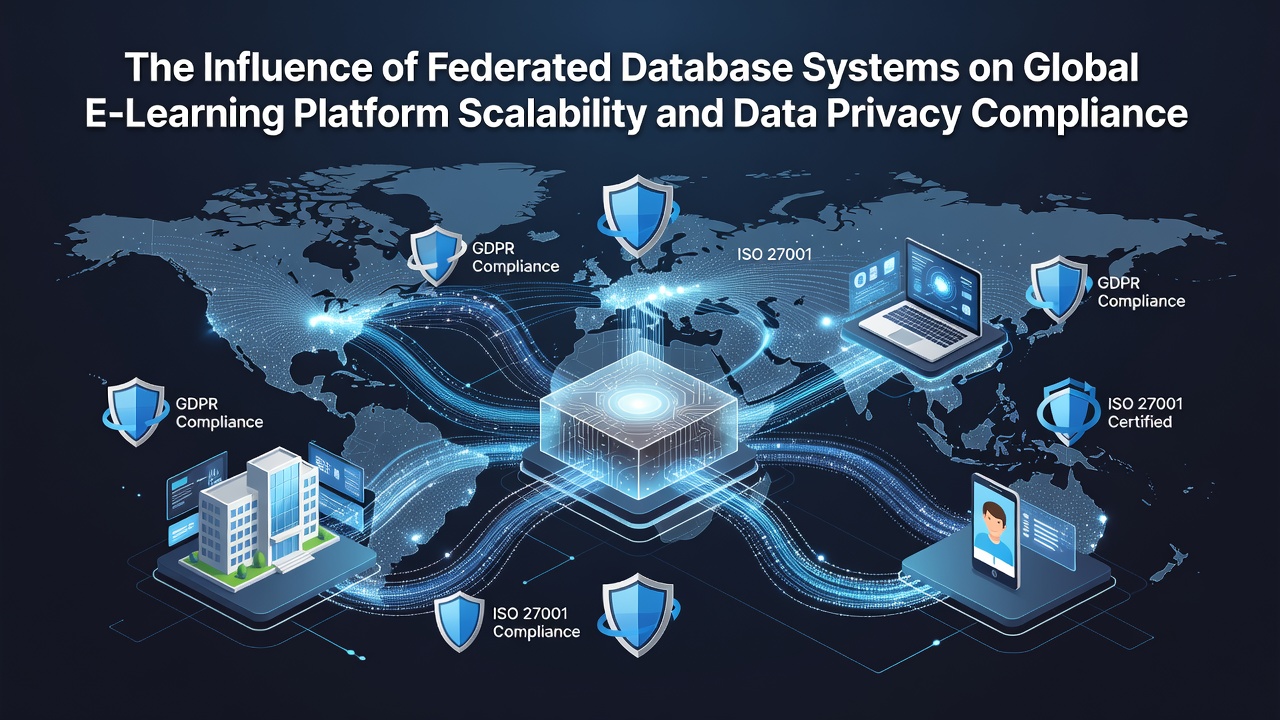
Global e-learning platforms manage enormous volumes of user data spread across continents, and federated database systems allow institutions to keep information localized while enabling unified queries and analytics. These systems connect independent databases through a middleware layer that routes requests without moving raw data to a central repository, which supports both expansion to new markets and adherence to regional regulations.
Core Mechanics of Federated Database Systems
Researchers at various academic centers have documented how federated setups operate by treating each regional database as an autonomous node that responds to standardized query languages, yet retains full control over its storage policies and access rules. When a platform receives a request for learner progress across multiple countries, the federation layer decomposes the query, sends subqueries to relevant nodes, and assembles results at the edge without transferring entire datasets. This approach reduces bandwidth costs and latency for users in distant locations while preserving the integrity of each local store.
Data shows that platforms adopting this model can scale horizontally by adding new nodes in emerging markets without redesigning the core schema or negotiating complex data-migration agreements. Studies from 2024 through early 2026 indicate consistent improvements in query response times when nodes reside closer to end users, particularly in regions with variable internet infrastructure.
Scalability Gains for Worldwide E-Learning Operations
E-learning providers operating in dozens of countries face constant pressure to accommodate growing enrollments and new content types such as interactive simulations and video libraries. Federated architectures address this by allowing each regional database to expand its capacity independently according to local demand, while the federation layer maintains a consistent view for administrators and analytics engines. Observers note that organizations can deploy additional storage or processing power in one jurisdiction without affecting performance elsewhere, which simplifies budgeting and capacity planning.
According to industry reports tracking platform growth, federated approaches have enabled several major providers to add millions of users in Asia and Africa between 2023 and 2026 without proportional increases in central infrastructure spending. The same reports highlight reduced downtime during peak enrollment periods because load balancing occurs naturally across nodes rather than through a single bottleneck.
Meeting Data Privacy Regulations Across Borders
Privacy rules such as the European Union's General Data Protection Regulation and Canada's Personal Information Protection and Electronic Documents Act require organizations to store certain categories of personal data within defined geographic boundaries. Federated database systems satisfy these constraints by keeping learner records inside the jurisdiction where they originate, while still permitting cross-border analysis through aggregated or anonymized outputs. Experts at regulatory bodies have confirmed that properly configured federation layers can log access requests and enforce consent rules at the node level, producing audit trails that align wth compliance frameworks.
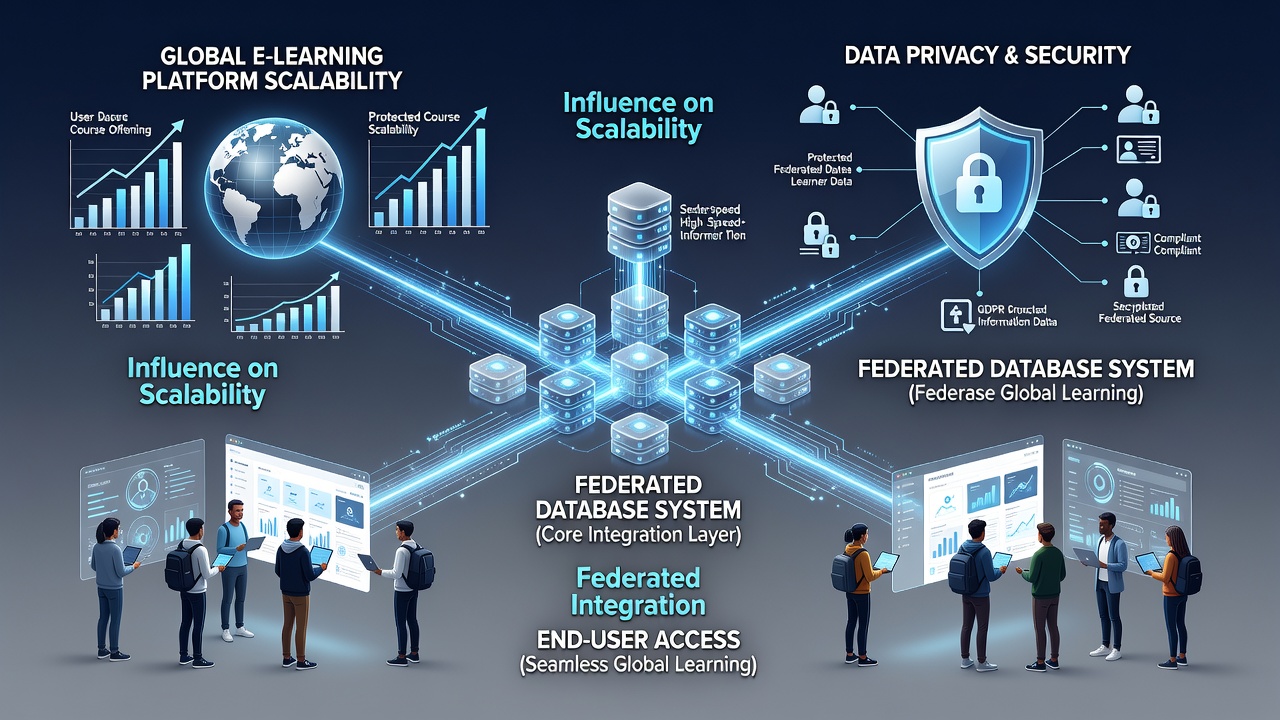
Platforms that implemented these systems before June 2026 reported smoother audits because data never left its country of origin during routine operations. The European Data Protection Board has published guidance noting that such architectures can support lawful international transfers when supplementary measures like encryption and access controls remain in place at each node.
Implementation Patterns Observed in Leading Platforms
One documented case involves a multinational provider that partitioned user profiles by continent, with each partition governed by local privacy officers yet linked through a federated query engine for global reporting. Another example shows an open-source learning management system integrating federation capabilities so smaller institutions could join a shared network without surrendering control of their student records. Research indicates these patterns reduce the risk of regulatory fines while supporting features such as personalized course recommendations that draw on worldwide usage statistics without exposing individual identities.
Technical teams often combine federated databases with edge caching and differential privacy techniques to further strengthen compliance. Data indicates measurable drops in cross-border data movement after deployment, which directly correlates with lower exposure to transfer-related legal challenges.
Conclusion
Federated database systems continue to shape how global e-learning platforms balance expansion with regulatory demands by keeping data local yet queryable. Evidence from multiple deployments demonstrates improved response times, simplified regional scaling, and stronger alignment with privacy statutes across jurisdictions. As enrollment numbers rise and regulations evolve, the architecture offers a practical pathway for organizations seeking both reach and compliance.