The Quiet Mechanics Behind Federated Learning Models Refining User Intent Detection Across Decentralized Search Infrastructures
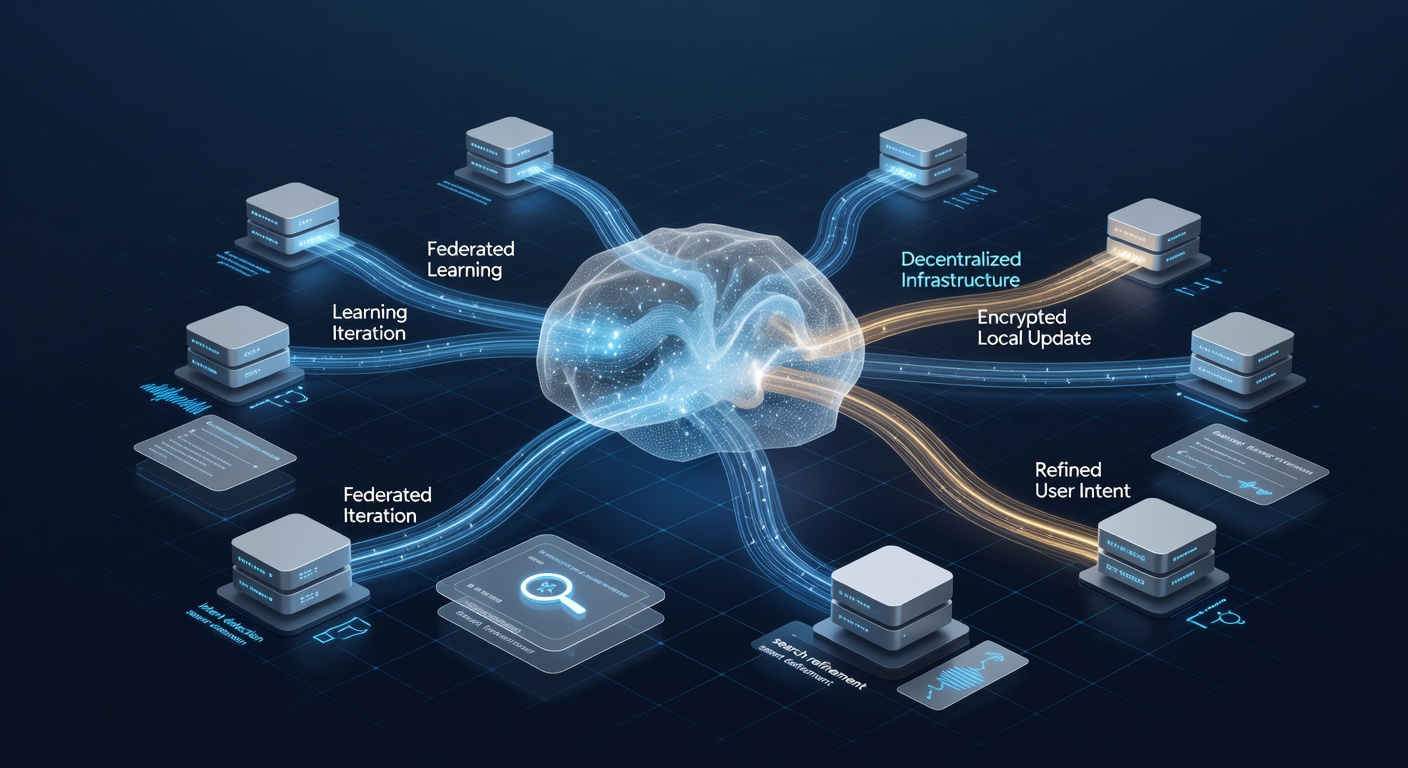
Decentralized search infrastructures distribute data processing across numerous independent nodes rather than relying on single centralized servers, and federated learning models operate by training algorithms locally on those nodes before aggregating updates into a shared global model. This approach allows systems to refine user intent detection, which involves interpreting search queries to match underlying goals such as finding specific information or completing transactions, without moving raw user data across networks. Observers note that the process begins with local devices or servers analyzing query patterns in isolation, then sending only model parameter adjustments back for combination at a coordinating point.
Core Components of Federated Learning in Search Systems
Each participating node holds its own dataset of search interactions, and the model updates occur through iterative rounds where local computations adjust weights based on patterns like query phrasing and click sequences. Researchers have documented how aggregation techniques, such as weighted averaging of gradients, combine these adjustments while preserving the privacy of individual records. In practice, this setup supports intent detection by identifying signals such as contextual keywords or session history that point toward user objectives, and the decentralized nature means no single entity accesses the full range of examples from all nodes.
Data shows that communication efficiency plays a key role, since transmitting full datasets would overwhelm bandwidth in large-scale search networks. Instead, compressed updates travel between nodes and the aggregator, with techniques like differential privacy adding noise to prevent inference of specific queries. Those who've examined implementations report that this balance enables continuous improvement in intent classification accuracy across diverse user populations and query types.
Refinement Processes for User Intent Detection
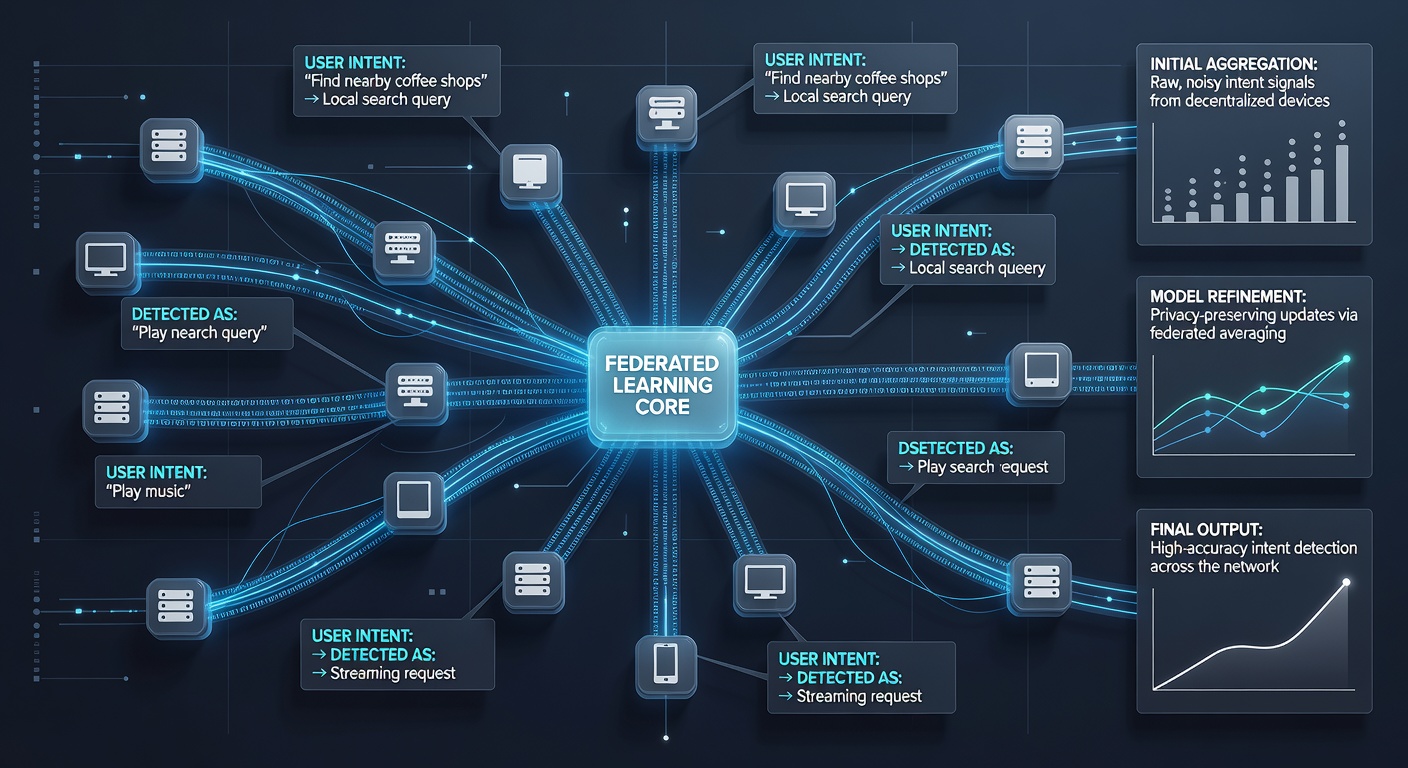
Intent detection models categorize queries into types such as informational, navigational, or transactional, and federated approaches refine these categories by incorporating local variations that reflect regional language use or device-specific behaviors. Studies indicate that successive training rounds allow the global model to capture subtle shifts, for instance recognizing when a query like "apple" refers to fruit versus technology depending on surrounding context collected at each node. The mechanics involve loss functions tailored to intent tasks, where local optimization minimizes errors on node-specific data before synchronization.
What's interesting is how these systems handle heterogeneity, since nodes may differ in data volume and quality. Adaptive weighting during aggregation prioritizes contributions from nodes with more reliable signals, and this leads to progressive enhancement of detection precision over multiple cycles. Evidence from technical evaluations reveals that models trained this way maintain performance levels comparable to centralized alternatives while reducing data exposure risks.
Developments Observed Through Mid-2026
By June 2026, several large-scale deployments had integrated federated learning into decentralized search frameworks to address growing query volumes and privacy regulations across regions. Reports from the European Data Protection Board highlight increased adoption in EU-based infrastructures, where nodes operate under strict data localization rules yet still contribute to shared intent models. In parallel, analyses from Australian research institutions describe similar patterns in regional search networks serving remote communities with limited connectivity.
Technical papers presented at that time detailed optimizations such as asynchronous update protocols that accommodate nodes coming online at different times, and these adjustments improved convergence rates for intent detection tasks. Figures reveal that participating systems achieved measurable gains in handling ambiguous queries after just a few dozen aggregation rounds, with benefits extending to reduced latency in returning relevant results.
Integration Challenges and Mitigation Strategies
Decentralized environments introduce variability in node reliability and data distribution, which can slow model convergence or introduce bias into intent classifications. Engineers address these issues through techniques like client selection algorithms that sample representative nodes for each round and robust aggregation methods resistant to outlier updates. Research from Canadian academic groups has examined how secure multi-party computation adds another layer of protection during the aggregation step, ensuring that even the coordinator cannot isolate individual node contributions.
Scalability remains a consideration as the number of nodes grows, yet modular architectures allow incremental expansion without full system redesigns. Observers note that monitoring tools track metrics such as update frequency and accuracy drift, enabling timely interventions when local data patterns diverge significantly from the global trend.
Conclusion
Federated learning continues to support refinements in user intent detection within decentralized search setups by keeping data localized while enabling collective model improvement. The mechanics rely on local training, selective aggregation, and privacy-preserving mechanisms that together address both performance and compliance needs. As infrastructures evolve, these methods provide a foundation for handling increasingly complex query interpretations across distributed environments.