Tracing Algorithmic Bias Detection Methods in Recommendation Systems for Niche Content Platforms
Greta Krause · Aug 25, 2026
Tracing Algorithmic Bias Detection Methods in Recommendation Systems for Niche Content Platforms
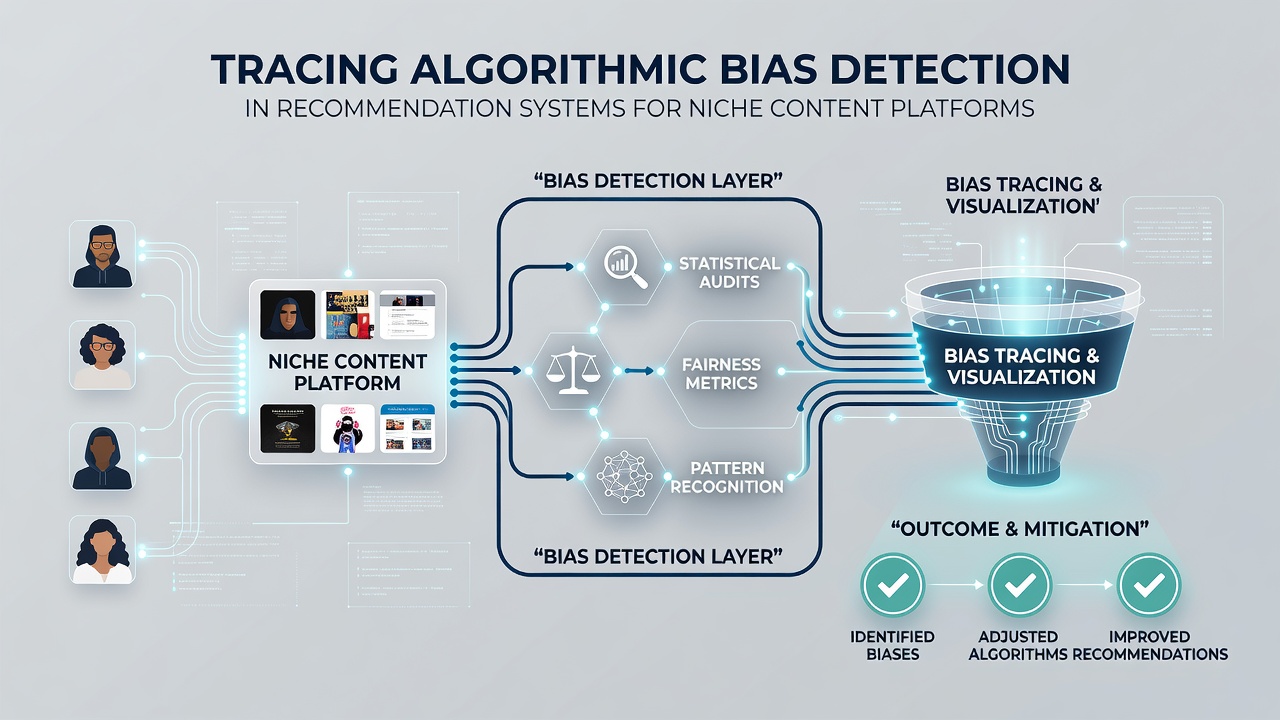
Algorithmic bias in recommendation systems emerges when models consistently favor certain content categories over others, often due to skewed training data or optimization priorities that overlook niche user groups. Researchers track these patterns through systematic audits that compare output distributions against demographic and content diversity benchmarks, and studies from multiple regions show how such imbalances appear more sharply on platforms serving specialized audiences like independent documentary viewers or regional music enthusiasts.
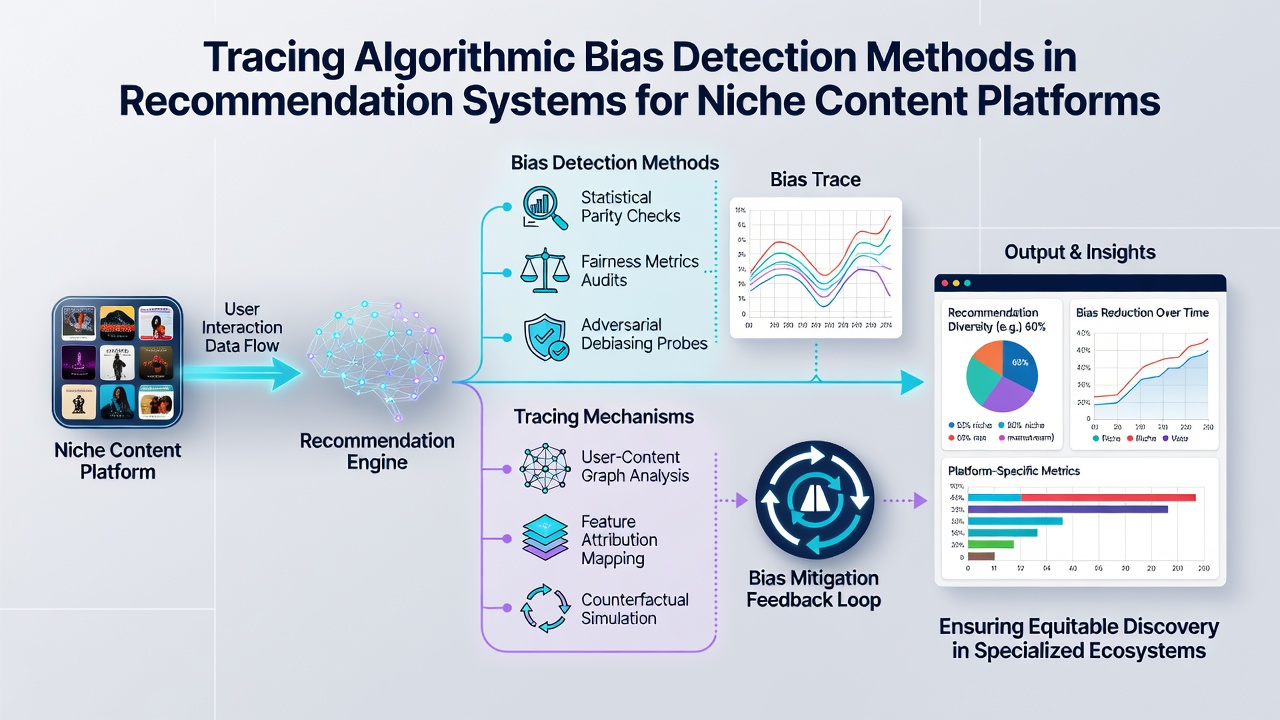
Detection methods rely on a combination of statistical parity checks, counterfactual fairness tests, and embedding analysis that measures how user features influence ranking scores. Teams apply these techniques by sampling recommendation logs over fixed time windows, then calculate metrics such as equalized odds and disparate impact ratios to flag deviations that exceed predefined thresholds.
Core Detection Techniques in Use
Statistical methods form the foundation, where analysts compute group fairness indicators across protected attributes like language preference or geographic origin while holding content popularity constant. Machine learning approaches extend this work through adversarial debiasing layers that penalize models when predictions correlate too strongly with sensitive variables, and hybrid pipelines combine both layers to produce auditable scores at each recommendation step.
Researchers have applied these tools to niche platforms by constructing synthetic user cohorts that mirror real engagement patterns but introduce controlled variations in topic interest. One study revealed that collaborative filtering systems trained on mainstream data sources under-represent long-tail creators until bias correction modules adjust embedding distances accordingly.
Application to Specialized Content Ecosystems
Niche platforms handle smaller, more homogeneous user bases yet still encounter bias when external data sources dominate training sets. Detection workflows adapt by focusing on intra-category fairness, measuring whether recommendations within a single genre or subculture distribute evenly across creator demographics. Platforms integrate continuous monitoring dashboards that surface drift alerts when weekly recommendation shifts exceed historical baselines.
Data indicates that graph-based recommenders, which connect users through shared interests, require additional regularization terms to prevent echo chamber reinforcement. Observers note that platforms serving independent journalism or academic video content have implemented these adjustments after internal audits identified repeated promotion of a narrow set of verified accounts.
Regulatory and Research Developments Through Mid-2026
By August 2026 regulatory frameworks in the European Union and Canada required documented bias testing for high-impact recommendation systems, prompting platforms to publish summary reports on detection outcomes. The NIST AI Risk Management Framework supplied standardized evaluation protocols that organizations adapted for content-specific metrics, while Australian research institutions contributed comparative studies on cross-cultural bias patterns in localized recommendation engines.
These standards emphasize reproducible testing procedures that include hold-out datasets representing underrepresented content types. Implementation teams run periodic re-evaluations after model updates, and the resulting logs feed into governance reviews that track remediation timelines.
Practical Challenges and Mitigation Patterns
Smaller platforms face constraints around labeled data availability, which limits the precision of bias estimates. Analysts address this gap by leveraging transfer learning from larger public corpora while applying domain adaptation techniques to preserve niche relevance signals. Privacy regulations further complicate data collection, leading teams to adopt federated evaluation methods that compute aggregate fairness statistics without centralizing individual user records.
Case examples from educational content platforms demonstrate how iterative testing cycles reduced over-representation of English-language sources once language-specific calibration steps were introduced. Similar adjustments appear in regional recipe recommendation services where ingredient popularity metrics were re-weighted to reflect local sourcing patterns rather than global search volume.
Conclusion
Tracing algorithmic bias in niche recommendation systems requires layered detection methods that combine statistical tests with model-level interventions, and ongoing regulatory alignment continues to shape standardized evaluation practices. Platforms that maintain transparent audit trails gain clearer insight into how training choices affect content visibility across diverse user segments, supporting more balanced distribution without sacrificing relevance.