Tracing Collaboration Metrics in Distributed Open-Source Repositories for Niche Accessibility Toolkits
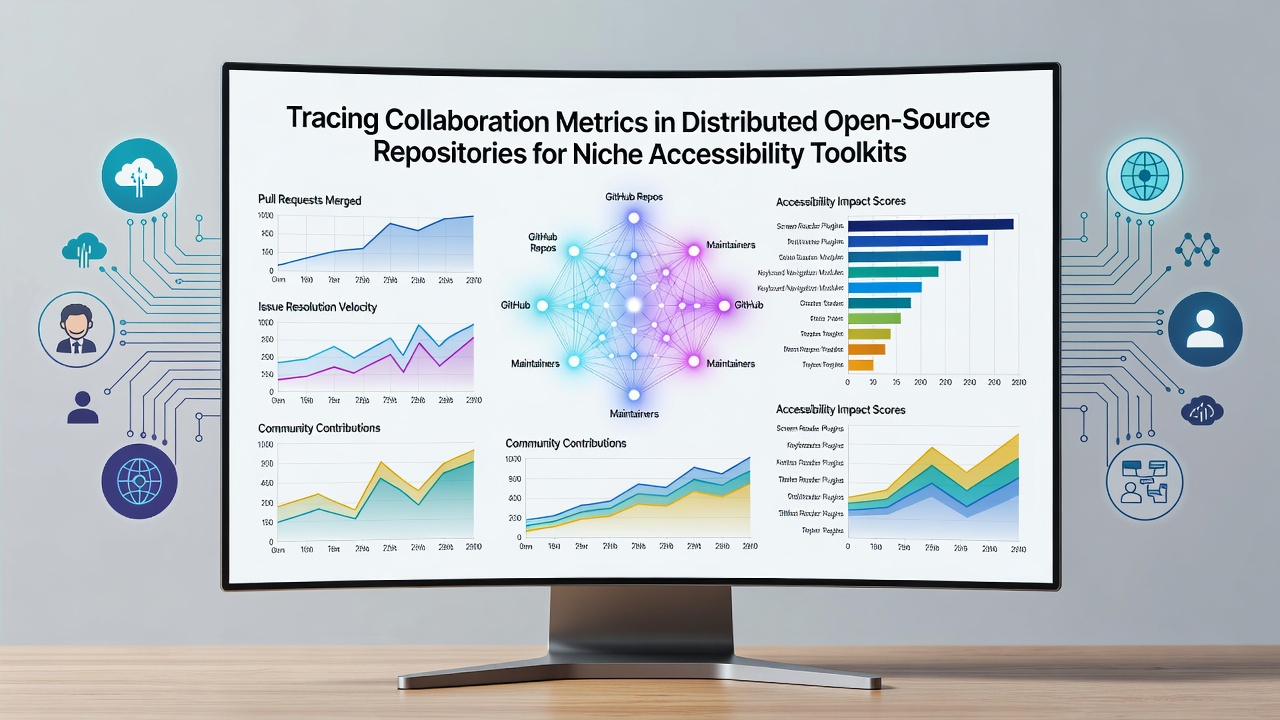
Distributed open-source repositories dedicated to niche accessibility toolkits have become central to software development efforts that support users with specific needs, and researchers track collaboration through commit histories, pull request flows, and issue resolution patterns that reveal how teams coordinate across time zones and skill sets. These repositories often focus on specialized components such as voice navigation extensions, screen reader integrations, or adaptive input handlers, where contributors work asynchronously yet maintain code integrity through structured review processes. Data from platform analytics shows steady growth in cross-regional participation since early 2024, with patterns emerging that highlight both the strengths and friction points of remote collaboration in this domain.
Core Metrics Used to Track Participation
Commit frequency and author distribution form the foundation of collaboration analysis, while researchers calculate metrics like average time between code submission and merge, along with the ratio of unique contributors per release cycle. Pull request review depth provides another layer, including comments exchanged per change set and the number of distinct reviewers who approve contributions before integration. Issue tracking adds context through resolution velocity and the proportion of bugs reported by non-core participants, which often signals broader community engagement in accessibility-focused projects. Observers note that repositories handling niche toolkits frequently display higher comment density in discussions around semantic markup standards, reflecting the technical precision required in this area.
Platform Tools and Data Collection Approaches
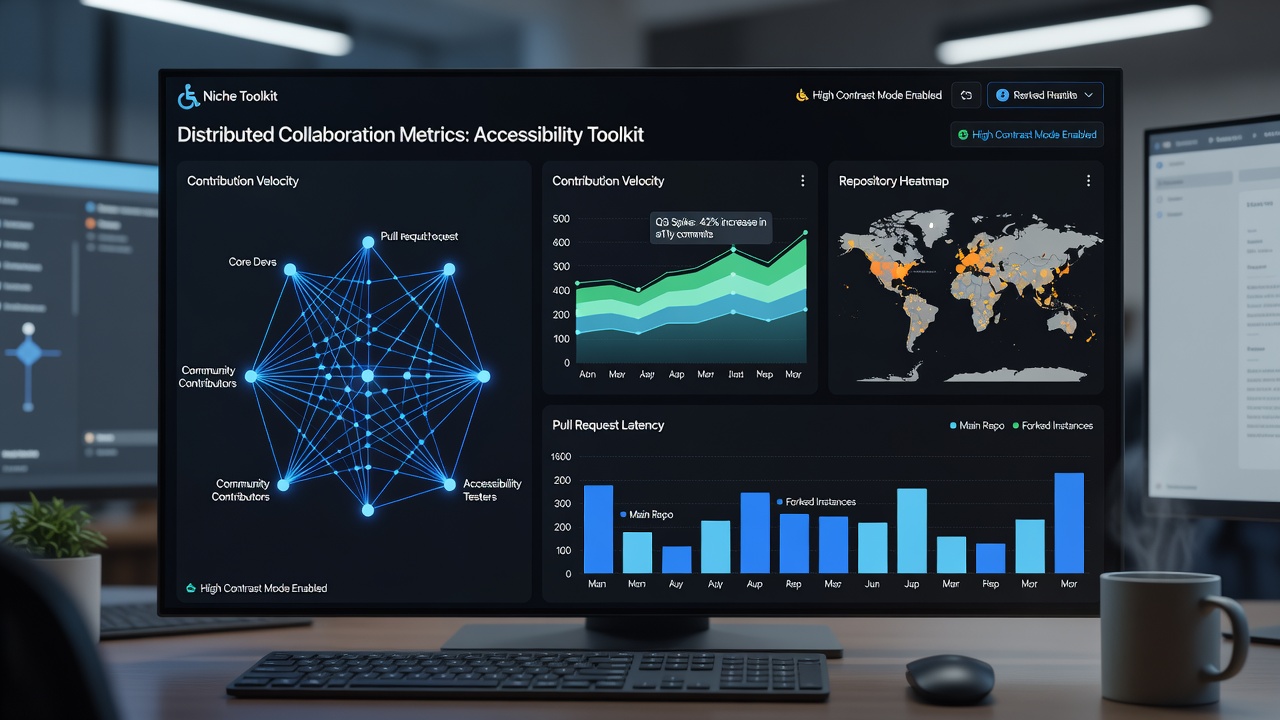
Git-based systems supply raw logs that developers parse with scripts to extract contributor networks, and visualization libraries turn these logs into graphs showing interaction clusters across geographic regions. Platforms such as GitHub and GitLab expose APIs that surface real-time statistics on fork counts, watch activity, and dependency usage, allowing teams to correlate external interest with internal collaboration velocity. Automated bots integrated into these workflows flag stalled reviews or unbalanced contributor loads, which helps maintainers redistribute tasks without disrupting momentum. As of July 2026, several accessibility toolkit maintainers have adopted custom dashboards that combine Git metrics with accessibility-specific tags, creating clearer pictures of how features addressing motor impairments or cognitive load progress through the pipeline.
Geographic and Role-Based Distribution Patterns
Contributors from Europe, North America, and Asia-Pacific regions appear in varying proportions depending on the toolkit's focus, with European participants often driving compliance-related enhancements tied to regional directives. Role analysis reveals that documentation writers and testers frequently outnumber core coders in these repositories, creating a layered collaboration model where domain experts review implementation details before code merges occur. Studies from academic groups indicate that time-zone overlap windows influence merge rates, yet successful projects mitigate this through asynchronous comment threads that keep discussions active across continents. One research effort at a Canadian institution tracked a voice input toolkit repository and found that non-code contributions accounted for nearly forty percent of total activity, underscoring the value of diverse participation types.
Challenges in Measuring Accurate Collaboration
Anonymous or pseudonymous contributions complicate attribution, while bot-generated commits can inflate activity counts if not filtered properly during analysis. Distributed teams sometimes rely on external chat platforms for coordination, leaving gaps in repository-native metrics that researchers address by cross-referencing archived discussion logs. Niche accessibility projects face additional hurdles because their contributor pools remain smaller than mainstream frameworks, making statistical anomalies more pronounced and requiring longer observation periods to establish reliable baselines. Data shows that privacy concerns around disability-related feedback further limit public issue reporting, prompting maintainers to adopt private