Tracing Data Lineage Protocols in API Ecosystems for Cross-Platform Analytics Dashboards
Rafael Brooks · Aug 6, 2026
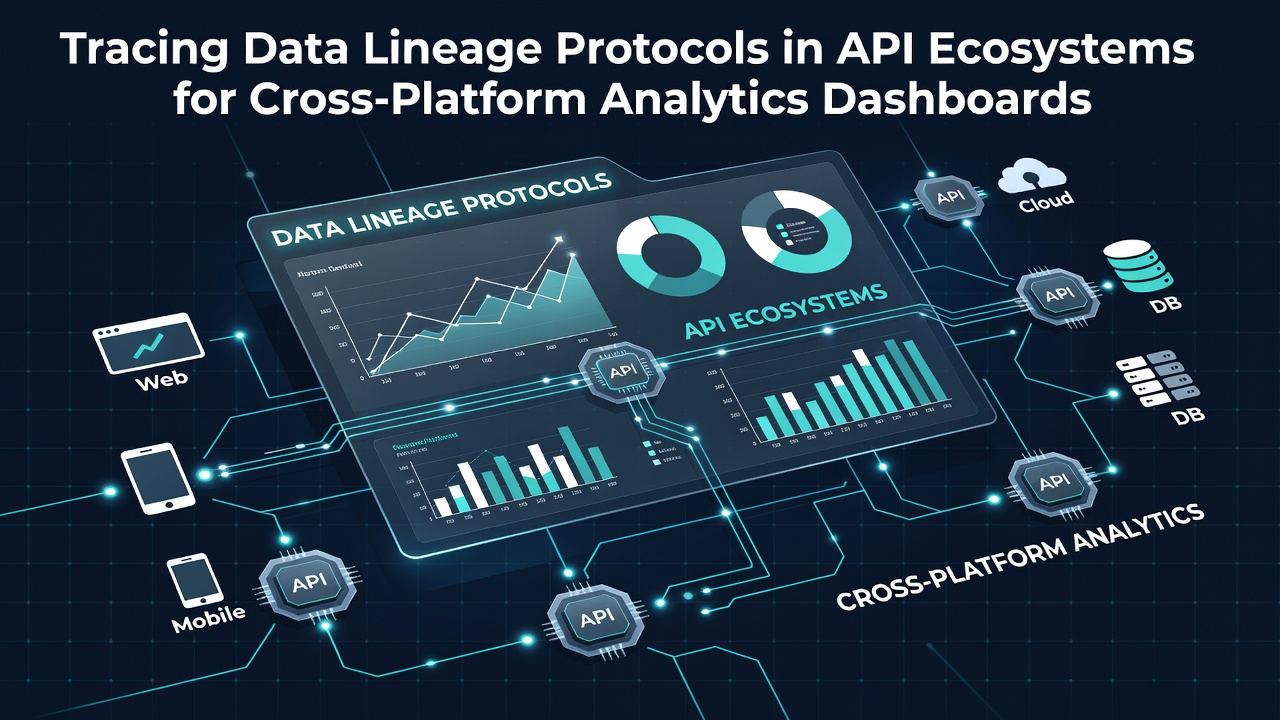
Tracing Data Lineage Protocols in API Ecosystems for Cross-Platform Analytics Dashboards
Data lineage protocols track the origin, movement, and transformation of information as it travels across interconnected systems, and in API ecosystems this process becomes essential for maintaining accuracy in cross-platform analytics dashboards that pull metrics from diverse sources including cloud services, mobile applications, and enterprise databases. Organizations rely on these protocols to verify that aggregated visualizations reflect genuine data paths rather than corrupted or incomplete streams, while developers implement standardized tracking mechanisms that log each API call and its downstream effects without disrupting performance. Protocols such as OpenLineage and Apache Atlas provide structured schemas for capturing metadata at every stage of data processing, and these frameworks integrate directly with RESTful and GraphQL endpoints to record details like source identifiers, transformation rules, and destination targets. When an analytics dashboard queries multiple platforms simultaneously, lineage data ensures that calculations involving aggregated figures maintain traceability back to original records, which proves critical during audits or when reconciling discrepancies across regions.Core Components of Lineage Tracking in APIs
API gateways often embed lineage headers into request and response cycles, allowing systems to propagate context such as dataset versions and processing timestamps through each hop in a distributed environment. This approach enables cross-platform dashboards to display not only current metrics but also the full provenance chain that supports those numbers, and it reduces errors when data merges occur between systems hosted on different cloud providers.
Researchers at institutions including those affiliated with the National Institute of Standards and Technology have documented how metadata schemas standardize these exchanges, creating consistent formats that multiple vendors can adopt regardless of underlying infrastructure. Observers note that implementation typically begins with tagging individual API operations, then extends to automated collection agents that compile lineage graphs in real time for dashboard rendering engines.Integration Patterns Across Platforms
Cross-platform analytics tools frequently combine data from SaaS applications, on-premises databases, and edge devices, which creates complex webs where lineage protocols must handle asynchronous updates and varying latency levels. Systems using event-driven architectures, for instance, log lineage through message queues so that dashboard queries can reconstruct accurate timelines even when source events arrive out of sequence.
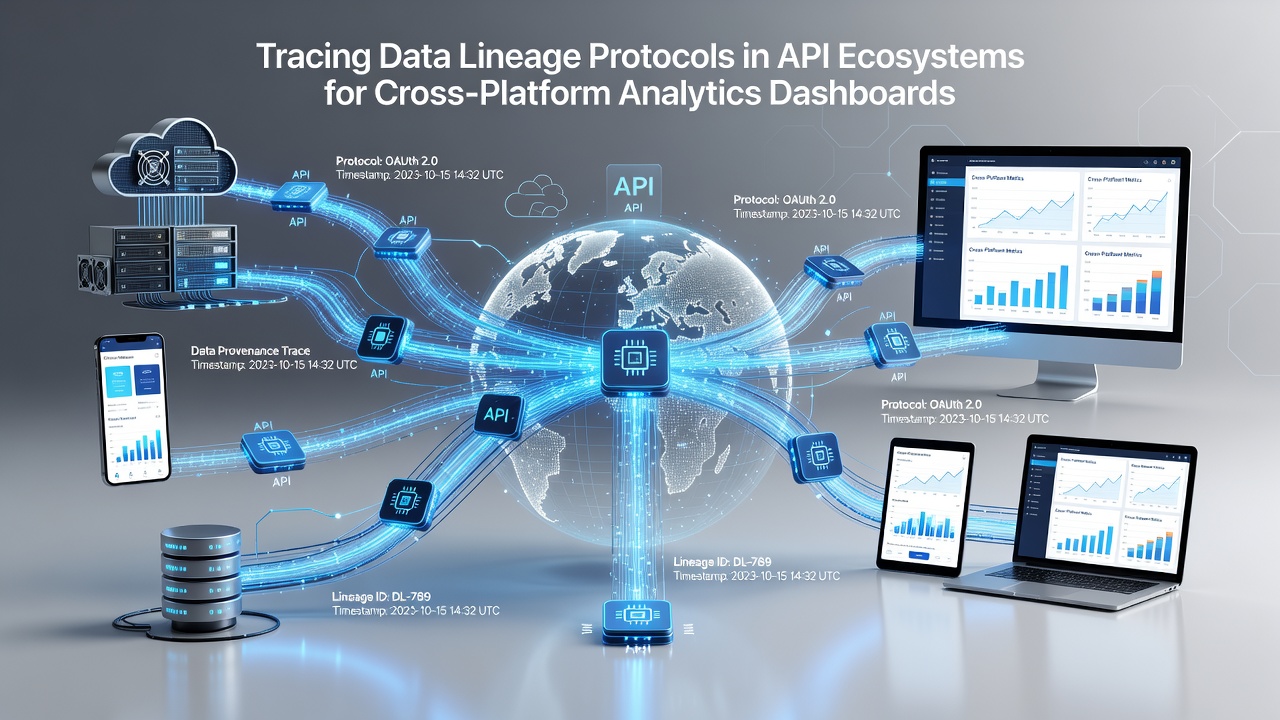 Data indicates that organizations deploying these protocols see measurable improvements in report reliability, particularly when regulatory requirements demand proof of data handling procedures. Integration often involves mapping API response fields to lineage entities, then feeding that information into graph databases that power interactive visualizations within the dashboards themselves.
Standards and Implementation Practices
Industry groups have developed extensions to existing API specifications that incorporate lineage fields, allowing developers to annotate payloads without custom middleware in many cases. According to reports from the European Data Protection Board, consistent application of these standards supports compliance across borders by providing clear audit trails that span multiple jurisdictions and service providers.
Those who manage large-scale deployments often combine protocol-based tracking with machine learning models that detect anomalies in lineage patterns, flagging potential issues before they reach dashboard users. This combination proves especially useful in environments where APIs evolve rapidly and backward compatibility must coexist with new data transformation logic.
Challenges in Cross-Platform Environments
Latency introduced by lineage collection remains a consideration during high-volume API interactions, yet optimized implementations limit overhead through selective sampling and asynchronous logging that does not block primary data flows. Security considerations also arise when lineage metadata contains sensitive context, prompting teams to apply encryption and access controls that align with the same policies governing the underlying datasets.
Figures from academic studies at universities across North America and Europe reveal that successful deployments address these challenges through phased rollouts, beginning with core analytics pipelines before expanding to peripheral data sources. Such strategies allow teams to validate lineage accuracy at each stage while minimizing disruption to existing dashboard users.
Conclusion
Tracing data lineage within API ecosystems delivers the foundational visibility required for trustworthy cross-platform analytics dashboards, and continued refinement of protocols ensures these systems scale alongside growing data volumes and regulatory expectations. Organizations that adopt standardized approaches gain clearer insight into information flows, supporting both operational decisions and compliance verification across distributed environments.