Voice Biometrics and Adaptive Token Systems Streamlining Secure Access in Multi-Platform Healthcare Data Portals
Ines Lehmann · Aug 18, 2026
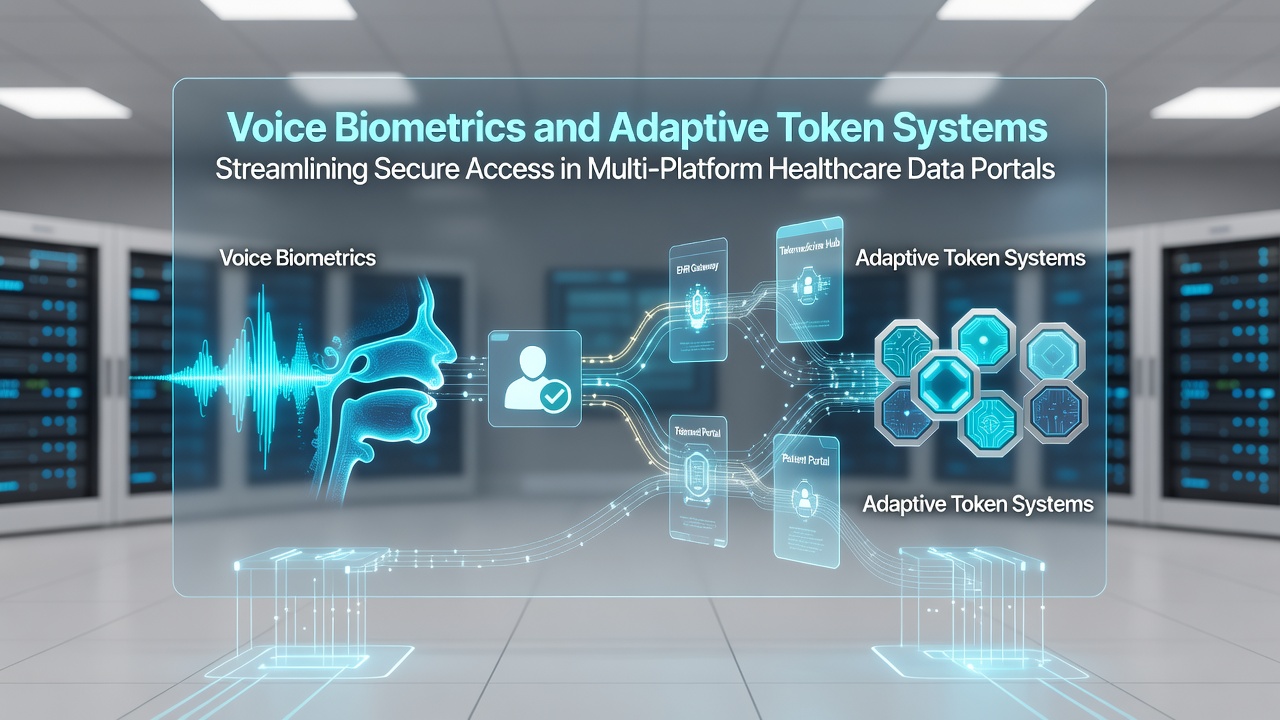
Voice Biometrics and Adaptive Token Systems Streamlining Secure Access in Multi-Platform Healthcare Data Portals
Voice biometrics combined with adaptive token systems now support secure access across hospital networks, patient portals, and telehealth platforms where users move between desktop systems, mobile devices, and integrated electronic health record interfaces. Healthcare organizations handle sensitive records daily, and these technologies verify identity through vocal patterns while issuing context-aware tokens that adjust permissions based on location, device type, and access history.
Voice Biometrics in Healthcare Authentication
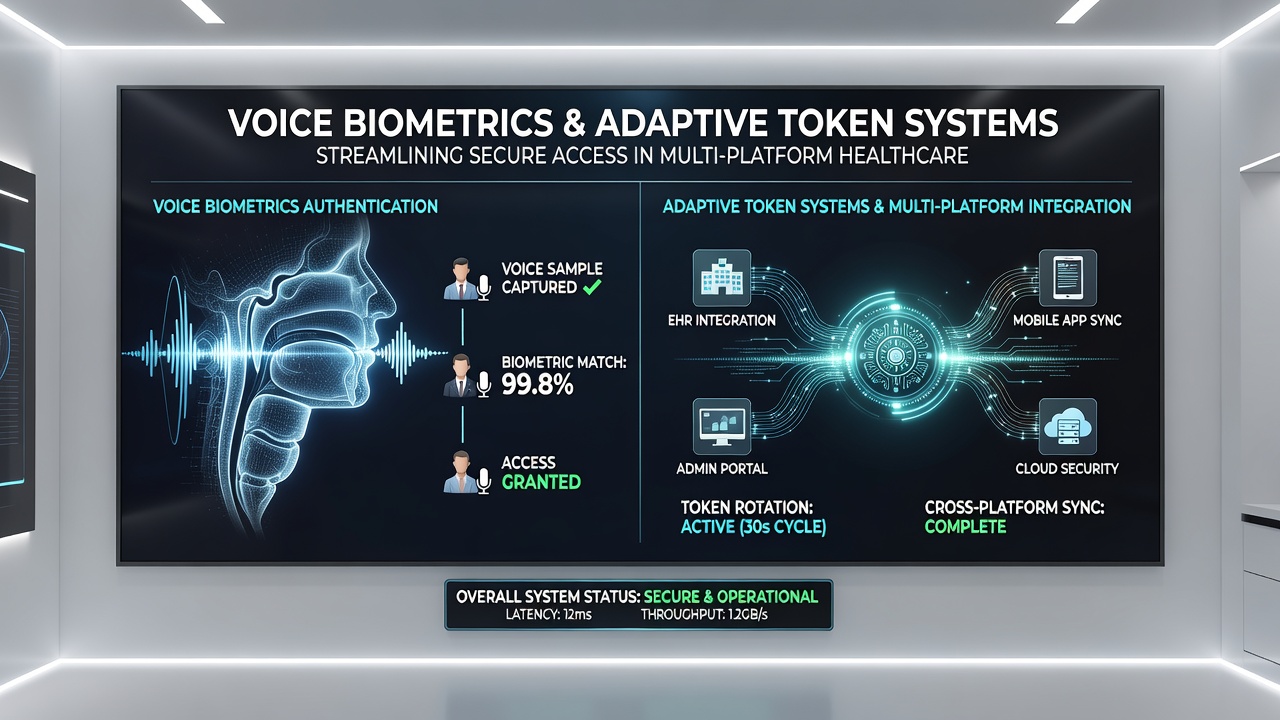
Voice biometrics capture unique vocal characteristics such as pitch, cadence, and spectral features during an initial enrollment phase that typically requires users to repeat phrases several times. Systems then compare live samples against stored templates during login attempts, and research from institutions tracking digital health adoption shows verification accuracy rates above 98 percent in controlled clinical environments. Hospitals integrate these tools into multi-platform portals so clinicians can authenticate quickly on tablets during rounds or through voice commands on mobile apps without typing lengthy passwords.
Data from the U.S. Department of Health and Human Services indicates healthcare data breaches affected over 725 organizations in the first half of 2026, prompting wider deployment of biometric layers that reduce reliance on static credentials vulnerable to phishing. One regional medical center in Canada reported a 40 percent drop in unauthorized access attempts after implementing voice verification across its EHR and patient-facing applications.
Adaptive Token Systems and Dynamic Access Control
Adaptive token systems generate short-lived credentials that modify privileges according to real-time risk signals including network location, time of day, and user behavior patterns. When a clinician logs in from an unfamiliar device or during off-hours, the system may require additional voice confirmation or limit data views until risk scores decrease. These tokens integrate with voice biometrics to create layered verification that scales across platforms without interrupting workflow continuity.
European studies on health data security, including reports coordinated through the European Commission's digital health initiatives, highlight how such systems align with GDPR requirements for data minimization and access logging. In August 2026 several Australian hospital networks began rolling out updated token frameworks that automatically revoke sessions after detected anomalies, a move that followed increased telehealth usage post-pandemic.
Multi-Platform Integration and Workflow Efficiency
Multi-platform healthcare portals now connect voice biometrics engines with token services through standardized APIs that allow seamless transitions between web dashboards, native mobile applications, and third-party telehealth tools. Developers configure these connections so a physician who starts a session on a desktop workstation can continue on a smartphone without re-enrolling biometric data. Observers note that token adaptation handles platform differences by evaluating device trust levels before granting elevated access to full patient histories.
Implementation examples include integrated systems at academic medical centers where voice authentication supports both staff and patient logins, while adaptive tokens enforce role-based restrictions that prevent overexposure of records. Figures from industry analyses show average login times reduced by 65 percent when organizations combine these methods, allowing faster retrieval of lab results and imaging studies during time-sensitive procedures.
Compliance, Security Metrics, and Emerging Standards
Regulatory frameworks in multiple regions require healthcare entities to demonstrate robust identity assurance, and voice biometrics paired with adaptive tokens meet many of those benchmarks by producing auditable logs of every authentication event. teh National Institute of Standards and Technology continues to update guidelines on biometric template protection, emphasizing encryption and revocability that current adaptive systems incorporate. Healthcare providers track metrics such as false acceptance rates and session duration to refine token policies over successive updates.
One study involving 12 European hospitals found that combining voice verification with risk-adaptive tokens lowered credential-sharing incidents by 52 percent compared with password-only environments. Those results emerged alongside broader adoption of FHIR-based data exchange standards that facilitate secure cross-platform queries while maintaining audit trails.
Conclusion
Voice biometrics and adaptive token systems continue to reshape authentication practices in multi-platform healthcare data portals by delivering layered verification that responds to contextual risks. Organizations adopting these approaches report measurable improvements in access speed and breach prevention, supported by evolving standards from regulatory bodies across North America, Europe, and Australia. As implementations expand through 2026 and beyond, the focus remains on maintaining interoperability while protecting patient information across every connected device and interface.