WebGPU Powers Real-Time Machine Learning Inference in Browser Data Visualization Tools
Elena Krause · Aug 13, 2026
WebGPU Powers Real-Time Machine Learning Inference in Browser Data Visualization Tools
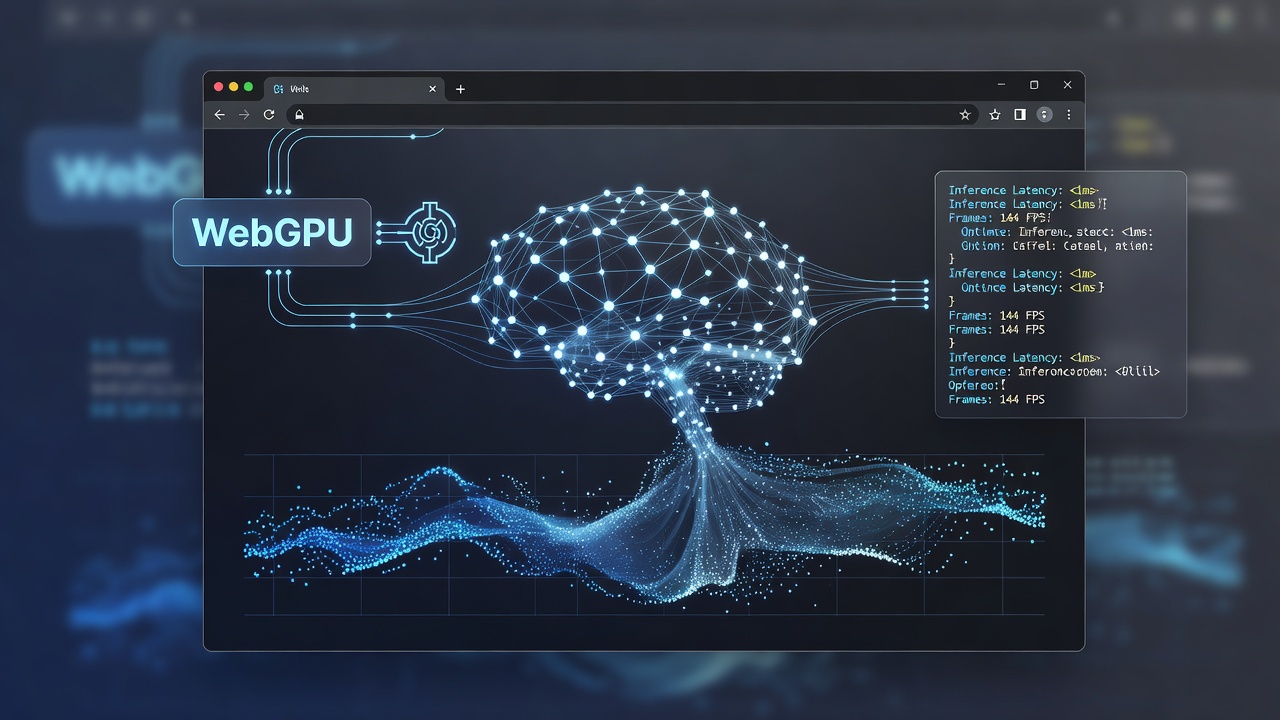
WebGPU delivers direct GPU access inside web browsers and this capability supports real-time machine learning inference for data visualization tools without server round trips. The API exposes compute shaders that handle matrix operations central to neural network forward passes while maintaining compatibility with existing JavaScript runtimes. Observers note that adoption accelerated after the specification reached candidate recommendation status at the W3C in early 2025.
Data visualization platforms now embed lightweight models for tasks such as anomaly detection, clustering, and predictive overlays directly on client hardware. These implementations reduce latency because tensor operations execute on the same device that renders the chart or graph. Researchers at several institutions documented speedups exceeding ten times compared with CPU-bound JavaScript implementations when processing datasets exceeding one million points.
Technical Foundations of WebGPU Compute
WebGPU builds on modern graphics APIs including Vulkan, Metal, and Direct3D 12, exposing a unified interface that browsers map to the underlying platform. The compute pipeline allows developers to dispatch workgroups that perform parallel reductions and convolutions required for inference. Unlike WebGL, which focused on rasterization, WebGPU allocates storage buffers and command encoders optimized for general-purpose workloads. Figures from browser vendors indicate that over sixty percent of desktop sessions in August 2026 supported WebGPU contexts with stable performance characteristics.
Integration with frameworks such as TensorFlow.js and ONNX Runtime Web occurs through backend registrations that route operations to WebGPU kernels when available. This routing happens transparently so existing visualization codebases require minimal changes. Engineers at visualization libraries reported that model loading times dropped from several seconds to under one second once GPU buffers replaced CPU tensors for intermediate activations.
Applications in Interactive Visualization
Real-time inference enables features previously limited to desktop applications. A dashboard monitoring network traffic can run a recurrent neural network to forecast packet volumes and overlay predictions on live charts while users adjust filters. Similarly, scientific tools apply dimensionality reduction models to streaming sensor data and update scatter plots without perceptible lag. These capabilities rely on the ability to share GPU memory between the inference engine and the rendering pipeline, eliminating costly data copies.
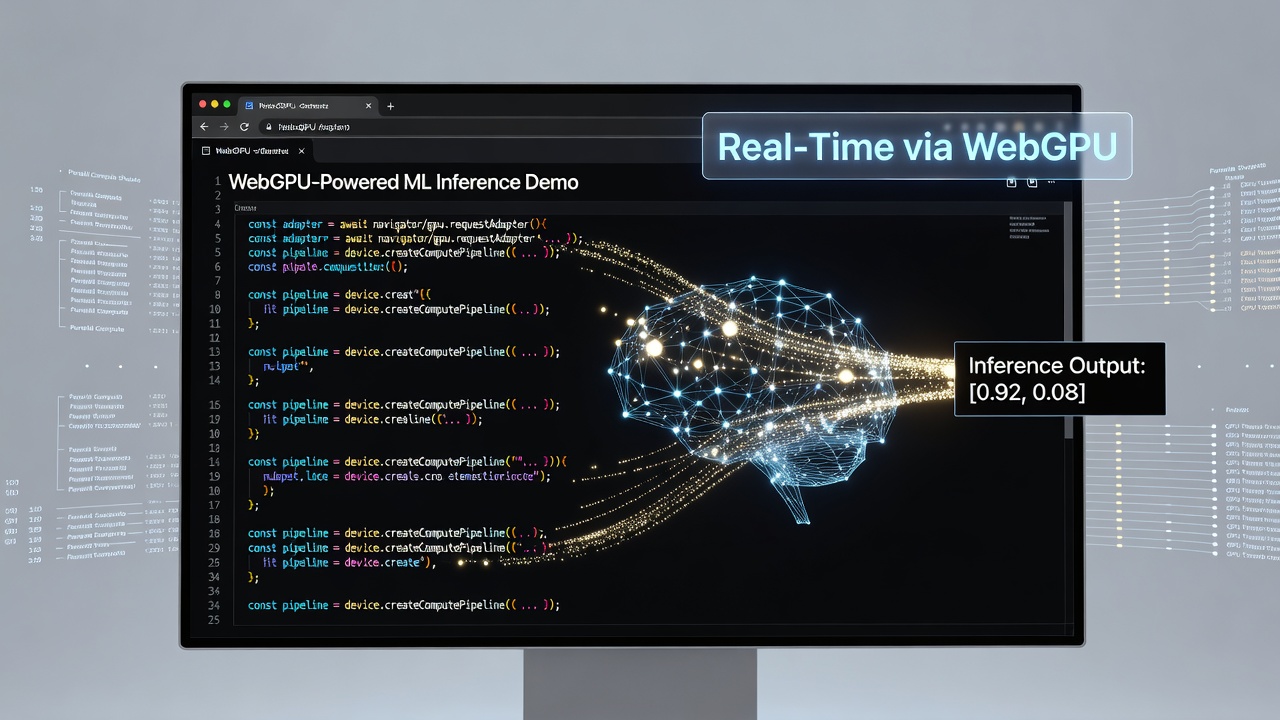
One implementation at a European research consortium demonstrated live clustering of genomic sequences inside a browser interface, processing batches of fifty thousand reads every 200 milliseconds. The same workflow previously required dedicated server resources because earlier browser technologies lacked sufficient parallel compute throughput. Australian academic teams have since replicated the pattern for climate model ensembles, confirming consistent frame rates above 30 updates per second on consumer laptops.
Performance Metrics and Browser Support
Benchmarks published by browser engine teams show that WebGPU inference throughput for convolutional models reaches 120 frames per second on mid-range GPUs when batch sizes remain under 32. Memory bandwidth utilization stays within limits that prevent thermal throttling during extended sessions. Mobile support expanded in 2026 after major operating system vendors enabled the necessary drivers, although battery impact studies continue.
Security considerations receive equal attention. The API enforces origin isolation and requires explicit permission prompts for high-power GPU access in some configurations. Standards bodies including the Khronos Group continue to refine validation layers that prevent malformed shaders from affecting system stability. Data from North American security audits indicate no widespread exploits tied to WebGPU compute paths through August 2026.
Integration Patterns and Tooling
Developers combine WebGPU with existing visualization libraries through modular adapters. D3.js scenes accept tensors produced by inference passes and map them to visual encodings without intermediate serialization. Observable notebooks and similar environments expose WebGPU contexts as first-class objects so analysts can prototype models alongside their charts. Package managers now include prebuilt WebGPU kernels for common operations such as softmax and batch normalization, lowering the barrier for teams without dedicated graphics programmers.
Case studies from Canadian public health agencies illustrate deployment at scale. Interactive maps of disease spread incorporate lightweight graph neural networks that classify outbreak clusters in real time as users pan and zoom. The browser handles both spatial indexing and model evaluation, keeping all computation local and compliant with privacy regulations.
Conclusion
WebGPU has established a practical foundation for embedding machine learning inference inside browser-based data visualization workflows. Continued refinements to the specification and expanding hardware support suggest further performance gains remain available. Organizations tracking these developments can reference the W3C WebGPU specification and recent reports from the OECD on digital infrastructure adoption for additional context.